
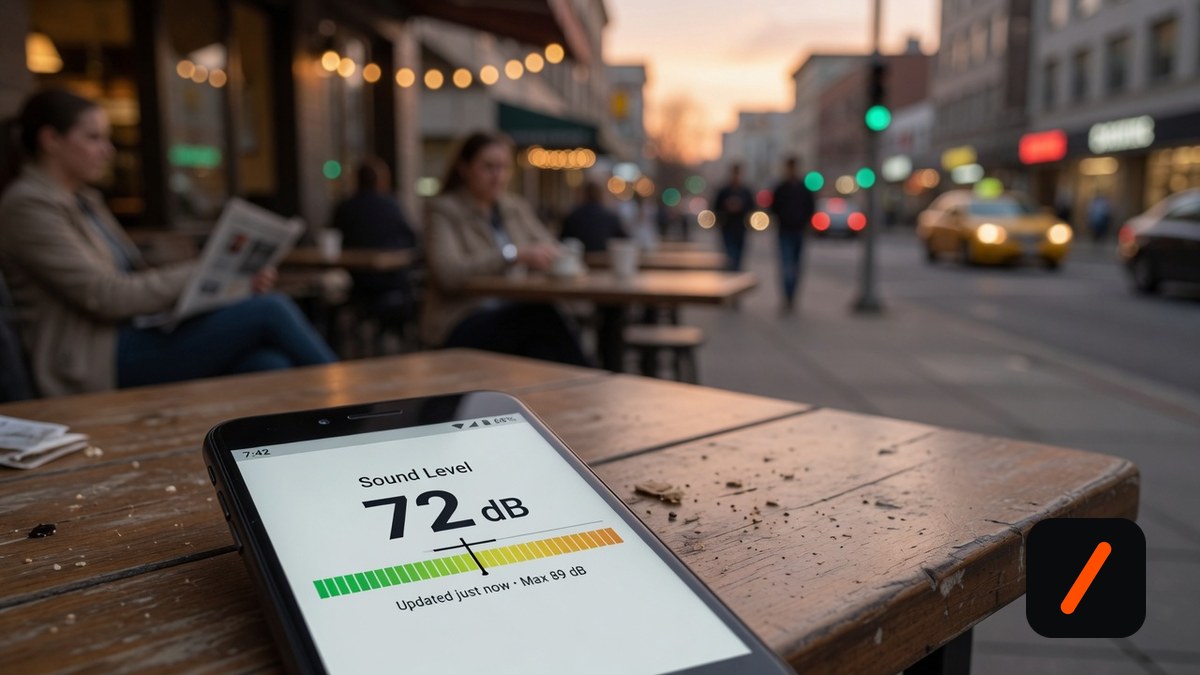
Most decentralized physical infrastructure networks ask you to buy a gadget, a hotspot, a dashcam, a weather station. Silencio is betting on the opposite: use the sensor already in everyone's pocket. Its new Passive Measurement feature lets smartphones automatically collect noise-pollution data while idle, rewarding contributors in SLC tokens for feeding a global audio-intelligence network, with privacy safeguards baked in. If it works, it turns millions of existing phones into a decentralized sensor grid and tests whether DePIN can scale without a hardware barrier at all.
- Passive Measurement lets phones auto-collect noise data while idle, so contribution needs no active effort and no dedicated device.
- Contributors earn SLC tokens for feeding a global noise-pollution dataset, the DePIN incentive loop applied to citizen science.
- Silencio runs on peaq, which it joined in 2025 alongside 100-plus DePIN apps building decentralized physical infrastructure.
- Its roadmap targets a Hyper-Growth phase (2026–2027) aiming at 50M users and full decentralization.
Why does phone-based sensing change the DePIN math?
Because hardware is the classic DePIN bottleneck. Networks like Helium and Hivemapper had to convince people to buy and deploy specialized devices, which caps how fast supply grows and how widely the network covers the map. Silencio sidesteps that: the microphone is already in billions of pockets, so the marginal cost of adding a sensor is effectively zero. Passive Measurement pushes that further by removing even the effort, contribution happens in the background while the phone sits idle. In principle that means coverage can scale at the speed of app installs rather than hardware shipments.
RelatedNodle Turns Idle Phones Into a Bluetooth DePIN
What is the data actually good for?
Noise pollution is a real and under-measured public-health and urban-planning problem. Chronic environmental noise is linked to sleep disruption, stress and cardiovascular effects, yet cities have sparse, expensive monitoring. A dense, continuously updated global noise map has genuine buyers: municipalities planning zoning and traffic, real-estate and property analytics, researchers studying health impacts, and businesses siting locations. That is the DePIN thesis in miniature, crowdsource a physical measurement too costly to gather centrally, then sell the aggregate to people who need it.
What about privacy?
This is the make-or-break question, and Silencio says safeguards are built in, capturing noise levels rather than recordings. The distinction matters enormously: a network that measures decibels is citizen science, a network that captures audio content is surveillance. For any always-on microphone system, trust hinges on provable, auditable guarantees that only sound levels leave the device, never conversation. Adoption at the 50M-user scale the roadmap targets will depend on users believing that boundary holds, so how transparently Silencio can demonstrate it is central to the whole model.
What it means for the market
The signal is that DePIN is experimenting past the buy-a-box model toward zero-hardware, phone-native networks, which could dramatically widen who can participate. Silencio's SLC is a small, speculative token, and the sector still wrestles with the gap between network usage and token price that has hammered even successful DePIN projects. This is analysis, not investment advice: the read is that phone-based sensing is a promising way to solve DePIN's supply-side bottleneck, but its success rides entirely on two things, credible privacy guarantees and real demand for the data, not on token incentives alone.
RelatedEnergy DePIN: crowdsourcing the power grid
Could this model spread to other sensors?
The interesting question Silencio raises is whether phone-native sensing generalizes. A modern smartphone is a dense bundle of sensors, microphones, barometers, accelerometers, magnetometers, GPS and cameras, most of which sit idle most of the time. If a network can turn ambient noise into a valuable dataset with acceptable privacy, the same passive-contribution model could in principle map air pressure, light pollution, connectivity dead zones, foot traffic or countless other physical phenomena, all without asking anyone to buy a device. That is a genuinely different scaling curve from hardware-based DePIN, which is gated by manufacturing and shipping. The catch is that not every measurement is as privacy-benign as a decibel reading; a camera or location stream carries far heavier consent and surveillance implications, and users are rightly warier of them. So the phone-as-sensor thesis will likely advance sensor by sensor, easiest and least sensitive first, with noise and environmental data leading precisely because they are low-stakes to share. If Silencio proves the loop works, expect a wave of imitators trying to do for other measurements what it is attempting for sound, and expect privacy design, not tokenomics, to be the axis on which they succeed or fail.
- Privacy proof. The whole model depends on trust that only noise levels, never audio, leave the phone. Watch for transparent, auditable guarantees.
- Real data buyers. DePIN lives or dies on demand. Watch whether cities, researchers or firms actually pay for the noise map.
- Usage vs token. Watch whether growing users translate into value accrual, the persistent DePIN disconnect.
- OfficialSilencio Network Passive Measurement and roadmap
- Infrastructurepeaq the DePIN layer Silencio builds on
- DataDePINscan network device and sector metrics
Original analysis by GenZTech, not investment advice. Details current as of July 2026.