
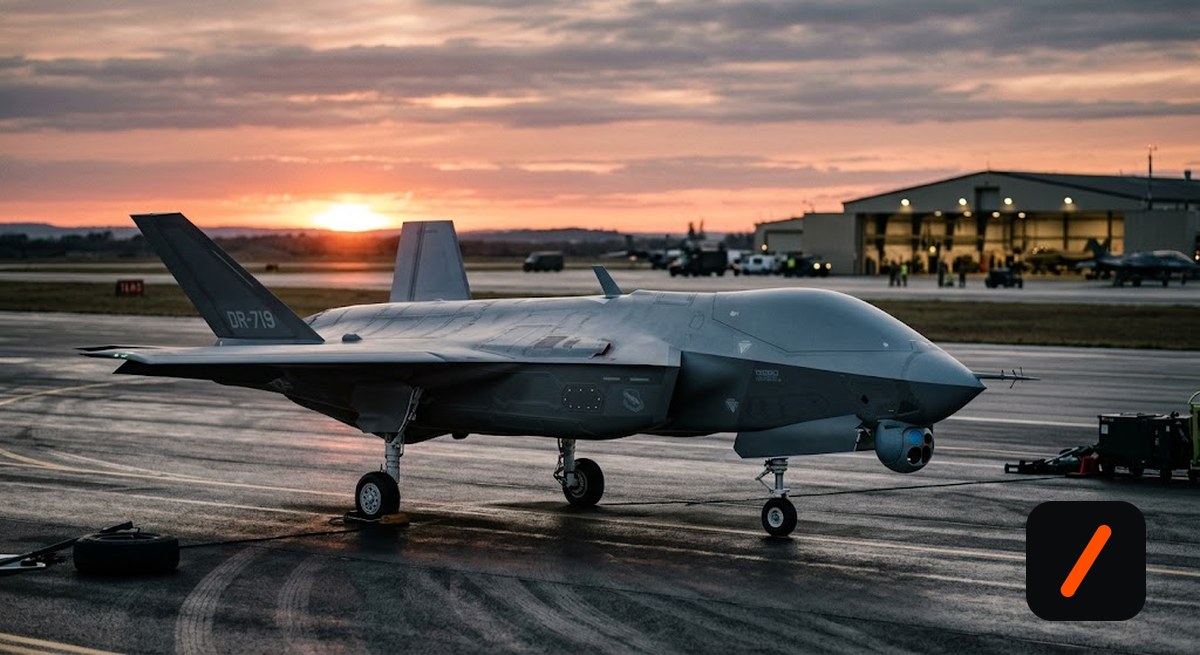
Shield AI raised $1.5 billion in a Series G, part of a broader $2.25 billion capital package, valuing the defense-autonomy company at $12.7 billion, up roughly 140% in a single year. The round is a marker for how far defense tech has moved from venture pariah to prized asset, and it lands in a 2026 where investors are pouring money into anything that looks strategically unavoidable. Shield AI's pitch, autonomy software that flies aircraft without GPS or a pilot, sits at the center of that thesis.
- Shield AI closed a $1.5B Series G inside a $2.25B total package, reaching a $12.7B valuation.
- That is roughly a 140% valuation jump in a year, a pace usually reserved for frontier AI labs.
- Its core product, Hivemind autonomy software, is designed to operate aircraft and drones in GPS- and comms-denied environments.
- The raise fits a 2026 pattern of megadeals in defense, AI infrastructure, and energy.
What does Shield AI build?
Autonomy software for aircraft. Its Hivemind stack is designed to let drones and jets navigate, sense, and make decisions without GPS or a human pilot, which is precisely the capability modern militaries want as electronic warfare makes GPS and radio links unreliable. That focus on operating in contested, comms-denied environments is what separates Shield AI from a generic drone maker: the value is in the brain, not the airframe. As conflicts increasingly feature jamming and spoofing, software that keeps flying when the signals drop becomes strategically valuable rather than merely convenient.
RelatedEtched hits $10.3B valuation on its Sohu inference chip bet
Why is the valuation moving this fast?
Because the market backdrop changed. Defense budgets are rising across NATO and allied nations, the war in Ukraine turned autonomous and attritable systems from concept into doctrine, and investors who once avoided defense on ethical or exit-risk grounds have reversed course. Global venture funding hit a record in the first half of 2026, and capital is concentrating in sectors that feel unavoidable: AI, defense, energy, and developer infrastructure. Shield AI checks the defense-plus-AI box twice, which is why a 140% markup in a year drew buyers rather than skepticism.
| Signal | Shield AI | Typical late-stage startup |
|---|---|---|
| Round | $1.5B Series G | $50M-200M |
| Valuation move | +140% in a year | Flat to modest |
| Sector | Defense autonomy | SaaS / consumer |
| Buyer appetite | Strategic + VC | VC |
Who benefits from this raise?
Shield AI first, obviously: $2.25 billion buys a long runway to scale manufacturing, win programs of record, and out-hire rivals. But it also validates a whole cohort of defense-tech startups, from Quantum Systems in Europe to a wave of autonomy and counter-drone companies, by proving late-stage capital is available at generous marks. The flip side is pressure: valuations this high require the company to convert into real defense contracts, and government procurement is slow, political, and unforgiving of hype. The money is a vote of confidence and a very large obligation.
What it means for the market
For investors, the signal is that defense has become a durable venture category, not a one-off. That reshapes where growth capital flows and pressures traditional primes, the Lockheeds and Northrops, to either partner with or compete against software-first challengers moving faster than legacy procurement. It also stress-tests the exit thesis: at $12.7 billion, Shield AI's eventual outcomes are an IPO or a strategic acquisition, both of which depend on it locking in large, recurring government programs. Watch contract announcements and international deals, which matter far more here than the usual startup vanity metrics. For deeper coverage, see our Funding Tracker and the ranked Biggest AI Funding Rounds.
RelatedHelsing Raises $1.8B at $18B Valuation for Defense AI
- Programs of record. Durable government contracts, not demo flights, justify the mark.
- International deals. Allied nations buying Hivemind would broaden the revenue base.
- Manufacturing scale. Autonomy software still needs airframes built at volume.
- Sector froth. If defense marks keep climbing, watch for a valuation reset later.
How does this compare to past defense funding?
A decade ago, a defense-autonomy startup raising $1.5 billion in a single round would have been unthinkable; the sector was seen as slow, politically fraught, and hostile to venture-style exits. What changed is not just budgets but the belief that software-defined systems will decide modern conflicts, and that startups can build them faster than legacy primes. Shield AI now sits alongside a cohort, from Anduril to Europe's Quantum Systems, redrawing that map. The risk is that abundant capital outruns the pace of actual procurement, inflating valuations on the promise of contracts that governments have signaled interest in but not yet signed.
Our take
The number that matters is not $1.5 billion; it is 140% in a year, because that pace tells you defense tech is now being priced like frontier AI rather than a slow, contract-bound industry. That is a bet that autonomy is the decisive capability of modern conflict and that Shield AI is the software leader. The thesis is sound, GPS-denied autonomy is genuinely hard and genuinely wanted, but the risk sits in the gap between venture speed and Pentagon speed. Startups raise in weeks; governments buy over years. Shield AI now has the capital to wait out that mismatch, which most challengers never do. Whether it can convert a $12.7 billion valuation into the contract base to support it is the whole game from here.
- OfficialShield AI company and Hivemind overview
- FundingCrunchbase News 2026 biggest funding rounds
- ReportingTechCrunch 2026 unicorn and megadeal context
Original analysis by GenZTech. Figures current as of July 2026.