
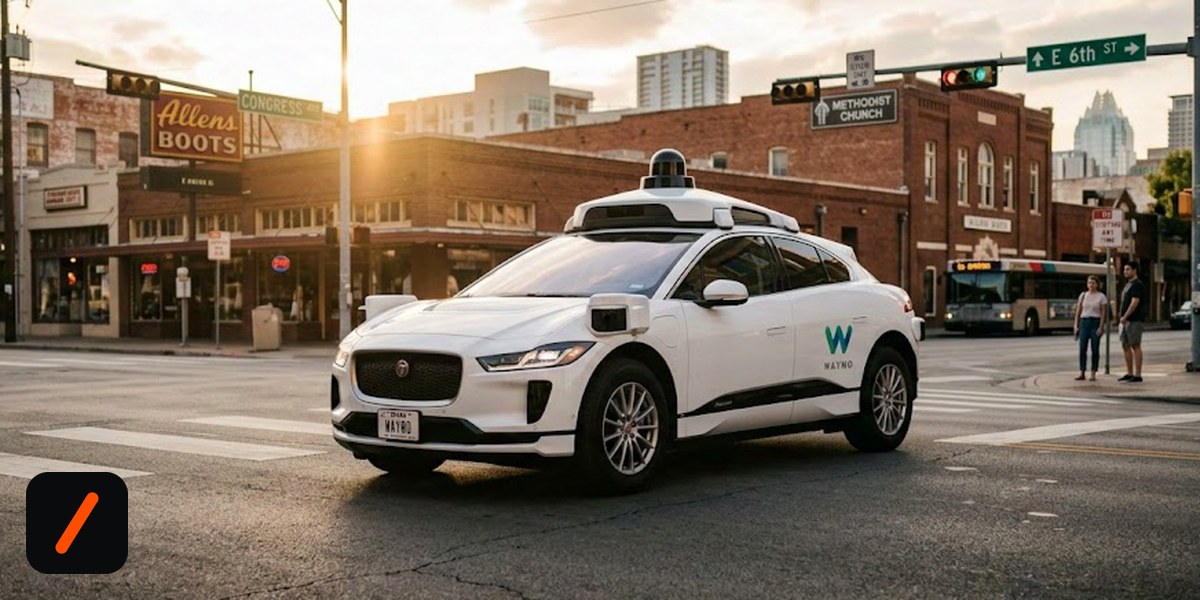
Waymo has told Uber it intends to run robotaxis through its own app in Austin and Atlanta starting January 2028, the Financial Times reported on Friday. Uber confirmed that the contract covering both cities expires in May 2028. Bloomberg, CNBC and TechCrunch matched the story the same day.
Several outlets framed this as a breakup. It is something more specific, and for Uber, worse. Waymo is not leaving. It is keeping the Uber channel and adding its own alongside it, sixteen months before it has to make a choice, in the two markets where Uber does the physical work of running the fleet.
RelatedTemporal Raises $550M Series E at $12.55B, 2.5x in 7 Months
What did Waymo actually tell Uber?
The notification covers Austin and Atlanta only, and it ends exclusivity rather than the partnership. Waymo vehicles keep appearing in the Uber app. They will also appear in Waymo's own. Riders in those cities get to choose, which is the first time that choice has existed in a market Uber operates.
The two companies already went through this once. Waymo and Uber ended their cooperation in Phoenix earlier in 2026, and Waymo has been running direct there since. Austin and Atlanta were the remaining joint markets, structured differently: Uber handles fleet operations, depot work, cleaning and charging, while Waymo supplies the vehicles and the driving software.
- Earlier 2026Phoenix cooperation ends Waymo goes direct in its oldest market
- 2026Public friction Uber CTO calls Waymo vehicles unsafe; Uber cites unsustainable terms
- Jul 24, 2026FT reports the notification Uber shares fall on the day
- Jan 2028Waymo app launches in Austin and Atlanta runs alongside the Uber deployment
- May 2028Contract expires Waymo has four months of data before deciding
Why running both channels is worse for Uber than leaving
Uber's business is demand aggregation. Its asset is the rider, not the car. That model has been extraordinarily durable for fifteen years for one structural reason: driver supply is fragmented. Two million individuals, no brand, no dispatch system, no way to reach a rider without an app in the middle. Fragmented supply has no bargaining power, so the aggregator sets the take rate.
Robotaxi supply is not fragmented. It is one company, with one brand, one dispatch system and a fleet it controls centrally. Everything that made drivers dependent on Uber is absent. Waymo can stand up a demand channel because it already owns the only hard part.
Once Waymo runs its own app in a market, Uber stops being the channel and becomes an incremental one. Incremental demand is the cheapest kind to negotiate down, because the supplier can measure exactly what it adds. That is the point of launching in parallel rather than waiting for May 2028: Waymo gets four months of side-by-side data on how many riders it can source alone before it has to renew anything.
| Who controls what | Rides via Uber app | Rides via Waymo app |
|---|---|---|
| Owns the rider relationship | Uber | Waymo |
| Sets the price | Uber | Waymo |
| Takes a cut | Uber | Nobody |
| Rider demand data | Uber | Waymo |
| Brand credit for the ride | Shared | Waymo |
| Fleet operations in these cities | Uber | Uber, for now |
How bad had the relationship already got?
Bad enough to be visible from outside, which is unusual for a live commercial partnership.
Uber's chief technology officer, Praveen Neppalli, posted video of Waymo robotaxis driving and described their behavior as unsafe and scary. Chief executive Dara Khosrowshahi has criticized how Waymo vehicles handle school zones and emergency situations. Uber has separately argued the partnership carries unsustainable financial terms. Waymo has complained about vehicle cleanliness and routing, which in Austin and Atlanta is a complaint about Uber, since Uber runs the depots. The two companies now sit on opposite sides of robotaxi regulation.
Executives do not publicly criticize a partner's product while the negotiation is still working. That happens afterwards.
RelatedGuardio Hits $1.1B Valuation on $40M Round Backed by Wiz's CEO
What it means for the stock
Uber shares fell on the report, and the two-city framing understates the exposure. Uber's autonomy strategy has been to become the demand layer for everyone else's robotaxis: many AV partnerships, no owned fleet, no capex. That thesis holds only if AV operators need Uber's distribution more than Uber needs their cars.
Waymo is the most advanced operator and the one best placed to test that assumption in public. If it fills its own app in Austin and Atlanta without Uber, every other AV company gets a free read on what Uber's channel is actually worth, and Uber's take rate on autonomous rides gets renegotiated industry-wide. The risk is not two cities. It is the pricing precedent.
For Alphabet the calculation runs the other way. Going direct converts Waymo from a supplier collecting someone else's residual into a consumer business that owns pricing, repeat behavior and the rider data. The number worth watching is Waymo's demand performance in Phoenix, where it has already been running solo long enough to produce an answer. This is analysis, not investment advice.
- Phoenix volumes. Waymo's solo demand there is the leading indicator for whether Austin and Atlanta work without Uber.
- Who keeps the depots. If Waymo brings fleet operations in-house before 2028, the separation is decided.
- Uber's other AV deals. Watch whether new partners now negotiate shorter terms or non-exclusive ones from the start.
- Lyft. An exclusivity vacuum in two large US markets is the most valuable thing Lyft has been offered in years.
Our take
Uber bet that autonomy would be a supply problem and that it would remain the demand layer regardless of who solved it. That was a sound bet when AV companies were small and needed distribution more than margin. Waymo is not small now.
The January 2028 date matters more than the May 2028 one. Waymo is not waiting for the contract to lapse. It is opening a parallel channel more than a year early, in the two cities where its partner does the unglamorous fleet work, and giving itself a measured answer before the renewal conversation starts. That is not a company ending a partnership. It is a company running an experiment on one, with the exit already booked.
- ReportBloomberg: Waymo Plans End of Uber Robotaxi Tie-Up confirms the FT report
- ReportTechCrunch: Waymo reportedly mulling a breakup with Uber January 2028 launch, May 2028 expiry, partnership friction
- ReportCNBC: Uber and Waymo to end exclusivity in Atlanta and Austin Uber's own confirmation of contract dates
- OfficialWaymo blog no company statement published on the notification
Original analysis by GenZTech. Reporting by the Financial Times, via TechCrunch.