
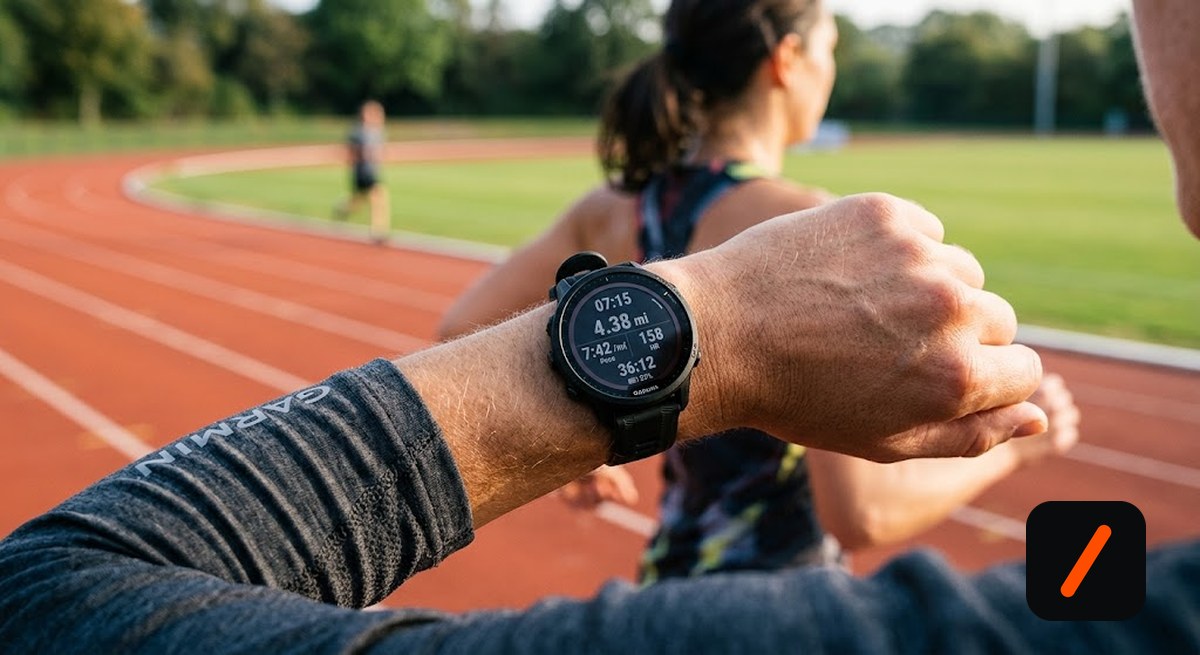
Garmin has refreshed its entry-level running line with the Forerunner 70 and Forerunner 170, replacing the Forerunner 55 and Forerunner 165. Both share the same hardware shell, a 43mm case, a 1.2-inch AMOLED touchscreen, and five physical buttons, with the model number marking the feature tier rather than the size. The move matters because it drags a genuinely good AMOLED display and Garmin's training tools further down the price ladder, squeezing the budget segment where casual runners actually shop.
- The Forerunner 70 and 170 replace the Forerunner 55 and 165 as Garmin's 2026 entry-level running watches.
- Both use an identical 43mm case, a 1.2-inch AMOLED touchscreen, and five physical buttons.
- The two models look the same; the number denotes the feature tier, not the body size.
- It pushes AMOLED and Garmin's training ecosystem into the price bracket most casual runners buy in.
What is new here?
The most consequential change is the screen. Entry Garmins historically used lower-resolution transflective displays to protect battery and price, while AMOLED was reserved for pricier models. Putting a 1.2-inch AMOLED panel in the base tier closes the visual gap that made cheaper Garmins feel dated next to an Apple Watch. Keeping five physical buttons alongside the touchscreen is deliberate, runners want tactile controls mid-workout when sweat and motion make touch unreliable. Sharing one case across both models simplifies the lineup and likely helps Garmin hold the price down.
RelatedAmazfit Balance 3 Pushes 21-Day Battery and Sapphire
How do the 70 and 170 differ?
They are physically identical, so the split is about features and software, not size. In Garmin's naming, the higher number generally unlocks more advanced training and recovery metrics, richer running dynamics, and longer feature depth, while the lower number keeps the essentials that a beginner or casual runner needs: accurate GPS, heart rate, structured workouts, and the Garmin Connect ecosystem. Buyers pick based on how deep they want to go, not on wrist size, which is a cleaner decision than Garmin's often-confusing lineup usually allows.
Why does the budget tier matter?
Because it is where the volume is. Serious athletes buy flagships, but most watch buyers are casual runners choosing between a $200-ish Garmin and an Apple or Samsung watch. By upgrading the display and holding the training tools that are Garmin's real advantage, the company is defending exactly the segment where lifestyle smartwatches have been eating in. It also arrives in a busy gadget month, with Samsung's Galaxy Watch 9 and Ultra 2 due at Unpacked and Xiaomi's Watch S5 pushing long battery life, so the timing is a direct competitive answer.
| Spec | Forerunner 70 / 170 | Forerunner 55 / 165 |
|---|---|---|
| Case | 43mm shared | Older 42-43mm bodies |
| Display | 1.2in AMOLED | Mixed (55 transflective) |
| Controls | Touch + five buttons | Buttons, limited touch |
| Role | 2026 entry tier | Outgoing entry tier |
How does it stack up against an Apple Watch?
This is the comparison Garmin actually cares about, because the casual buyer weighing a first serious running watch is usually cross-shopping an Apple Watch or a Galaxy Watch. The lifestyle smartwatches win on apps, notifications, and polish, and now that the Forerunner has AMOLED, they no longer win on screen either. Where the Forerunner pulls ahead is the stuff runners feel over months: battery measured in days rather than a day, physical buttons that work when your hands are wet and moving, GPS and training tools tuned for the sport rather than bolted on, and a data ecosystem in Garmin Connect built around structured workouts and recovery. The trade is focus. An Apple Watch does a hundred things acceptably; a Forerunner does a smaller set of running-specific things very well and gets out of the way. For someone whose main use is fitness, that focus plus multi-day battery is the more sensible buy, and the display upgrade removes the one obvious reason a casual shopper used to pick the flashier lifestyle watch instead. Garmin is betting that once the screen gap closes, its core advantages sell themselves, and for the target buyer that bet looks sound. The person who runs three times a week and wants numbers they can trust will feel the multi-day battery and button controls every single week, long after the novelty of a brighter panel has worn off.
RelatedNothing Launches the Phone (4b) and Ear (3a) Together
Our take
This is Garmin doing the unglamorous but smart thing: raising the floor. The company's edge over lifestyle smartwatches has always been training depth and battery life, not screens, and the display gap was the one weakness casual buyers noticed in a store. Fixing it in the entry tier, while keeping physical buttons that runners actually use, is a precise competitive move. Nobody will call the Forerunner 70 exciting, but for the person choosing their first real running watch, it is quietly the most sensible pick Garmin has offered at this price.
- ReferenceUpcoming wearables and health tech, 2026 Gadgets and Wearables
- ReportBest upcoming smartwatches, 2026 Smartwatch Insight
- ReportBest new gadget releases of 2026 Gear Patrol
Original analysis by GenZTech. Reporting via Gadgets and Wearables.