
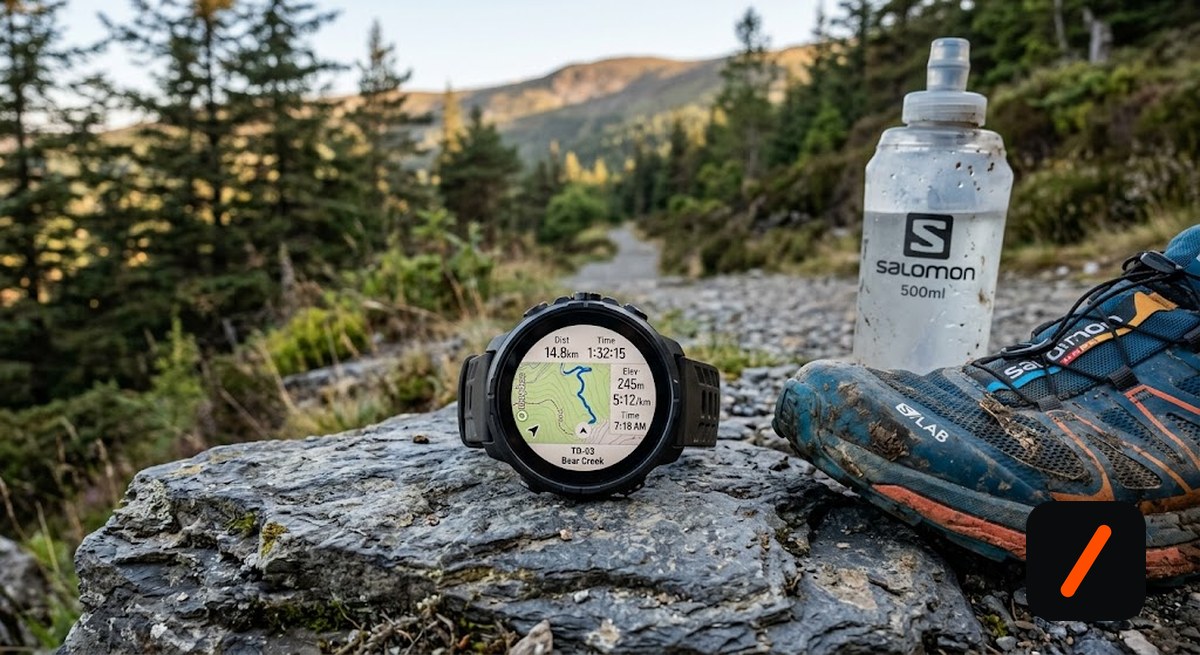
Coros has quietly built the strongest counter-argument to charging your watch every night: the Balance 3 delivers up to 21 days of battery on a standard-use charge while still running a bright 3,000-nit sapphire AMOLED, offline maps, and GPS, starting at $370. In a category where flagships from Apple and Samsung measure life in days and sometimes hours, the pitch is simple and unusually honest, buy the watch that you can forget to charge.
- Battery is the headline. Up to 21 days of standard use, an order of magnitude beyond mainstream smartwatches, is the feature Coros is selling and the reason to look.
- The screen is not a compromise. A 1.5-inch AMOLED with sapphire glass and up to 3,000 nits means the long life does not come from a dim, low-refresh display.
- Real outdoor tools. Offline maps and GPS put it in Garmin's territory for runners, hikers, and cyclists who leave connectivity behind.
- Aggressive pricing. $370 base, $600 for the Ultra, with a titanium variant at $450, undercuts comparable multi-sport watches from the incumbents.
Why does battery life matter more than another sensor?
Because the daily charge is the friction that quietly ruins the two things a smartwatch is supposed to be good at: sleep tracking and always-on availability. A watch you charge every night is a watch that is off your wrist for the exact hours it should be measuring your recovery, and a watch that dies mid-hike or mid-marathon is worse than no watch at all. Coros built its brand on endurance athletes for precisely this reason, and the Balance 3 extends that logic to a mainstream buyer. Twenty-one days means charging roughly twice a month, which is the difference between a device you manage and one you simply wear, and it is the single spec most flagship owners actually complain about.
RelatedAmazfit Balance 3 Pushes 21-Day Battery and Sapphire
Is the long life hiding a bad screen?
That is the usual trade, and it is the one Coros avoids here. Historically, week-plus battery watches got there with dim, low-refresh, memory-in-pixel displays that looked a generation behind. The Balance 3 uses a 1.5-inch AMOLED with sapphire glass, scratch-resistant and premium, and pushes up to 3,000 nits of brightness, which is genuinely usable in direct sunlight, the condition outdoor watches most need to survive. Getting both a bright modern AMOLED and three weeks of life is the engineering story: efficient silicon, a disciplined software layer that is not trying to be a phone on your wrist, and a battery sized for endurance rather than app sprawl.
| Spec | Coros Balance 3 | Typical flagship |
|---|---|---|
| Battery (standard) | ~21 days | 1–2 days |
| Display | 1.5" AMOLED, 3,000 nits | AMOLED, ~2,000 nits |
| Glass | Sapphire | Sapphire or glass |
| Offline maps | Yes | Varies |
| Base price | $370 | $400–$800+ |
Who is it actually for?
Two overlapping buyers. The obvious one is the endurance and outdoor crowd, runners, cyclists, hikers, backcountry travelers, who want reliable GPS, offline maps, and a watch that outlasts a multi-day trip without a power bank. The less obvious and larger one is the mainstream smartwatch owner who is simply tired of nightly charging and does not need their wrist to run apps, take calls, and mirror their phone. For that person, the Balance 3 is a trade: you give up the deep app ecosystem and tight phone integration of an Apple Watch or Galaxy Watch, and in return you get a watch that tracks your sleep every night because it is never on the charger, and that you top up twice a month.
Where does it fall short?
The honest gaps are ecosystem and polish, not hardware. Coros's software and app store are lean by design, so if your smartwatch life revolves around third-party apps, contactless payments everywhere, cellular independence, and deep integration with a phone's notifications and assistant, this is not that watch and is not trying to be. The Ultra at $600 and the titanium at $450 also blur the value story a bit, the $370 base is the sharp price, and climbing the lineup narrows the gap to the incumbents. But for the specific buyer who ranks battery and outdoor capability first, the Balance 3 answers the one complaint the flagships have never solved.
RelatedXiaomi Watch S5 pairs a 21-day battery with bright AMOLED
- Real-world battery. The 21-day figure is standard use; heavy GPS and always-on display cut it hard, so independent endurance tests are the number that matters.
- Health-sensor accuracy. Battery and screen are settled; the open question for a mainstream buyer is how the heart-rate and sleep tracking stack up against Garmin and Apple.
- The incumbents' response. If Coros keeps winning on uptime at this price, watch whether Garmin and Apple finally treat multi-week battery as a headline feature rather than an afterthought.
Our take
The smartwatch market has spent a decade adding sensors, apps, and brightness while quietly accepting that you will charge the thing every night, and Coros keeps calling that bluff. The Balance 3 is the cleanest version of the argument yet, because it refuses the usual compromise: you are not trading a good screen for long life, you are getting a bright sapphire AMOLED and three weeks of battery at a price that undercuts the flagships. It will not replace an Apple Watch for someone who lives in that ecosystem, and it should not try. But for the very large group of people whose honest smartwatch complaint is "I forget to charge it and then it is dead," this is the most direct answer on the market, and the price makes it an easy one to justify.
- Company Coros Balance 3 official specs, battery claims, and pricing
- Review TechRadar, best new gadgets July 2026 hands-on placement among the month's launches
Original analysis by GenZTech. Specs via Coros.