
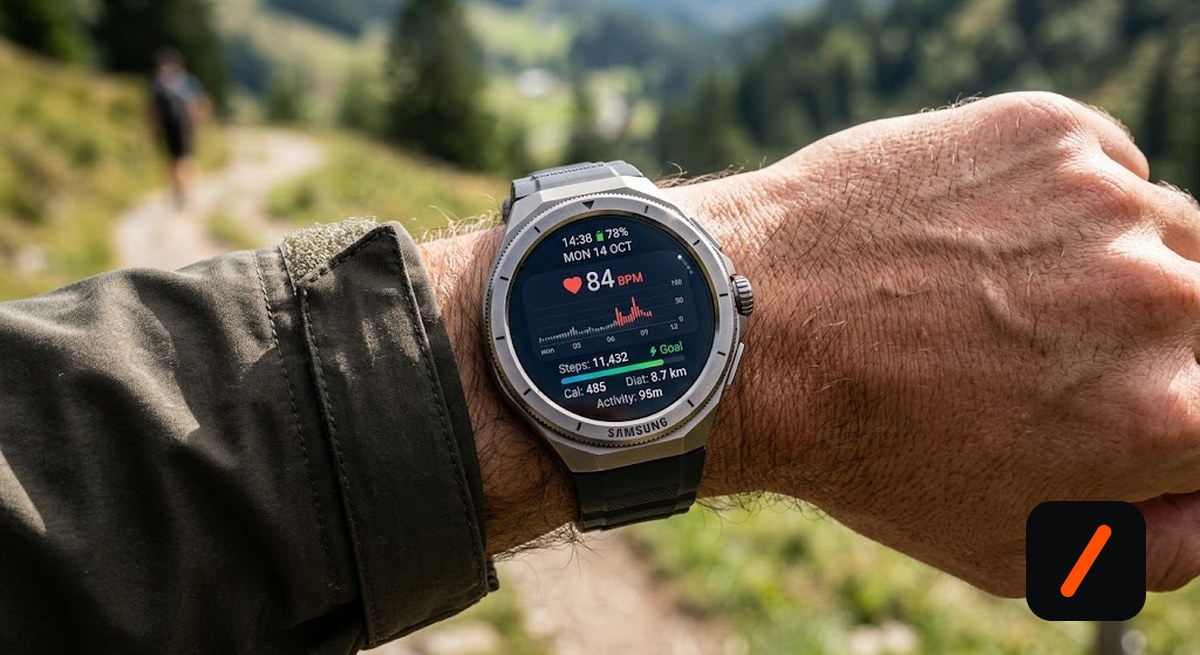
Ahead of Samsung's Galaxy Unpacked on July 22 in London, the leaks point to the Galaxy Watch Ultra 2 leading with the one spec that actually decides whether people wear a smartwatch: battery. A rumored 784 mAh cell would dwarf the rest of Samsung's lineup and target the multi-day endurance that has become the real battleground in wearables. Paired with next-generation health sensors and deeper Galaxy AI, the Watch Ultra 2 is Samsung's clearest statement yet that the smartwatch race is now about lasting longer and sensing more, not adding another watch face.
- The Galaxy Watch Ultra 2 is expected to carry a roughly 784 mAh battery, far larger than the standard Galaxy Watch 9 models.
- Samsung is pitching next-generation health sensors with Galaxy AI for more precise monitoring and personalized recommendations.
- The Galaxy Watch 9 40mm and 44mm are tipped at 382 mAh and 435 mAh respectively, underlining how much bigger the Ultra's cell is.
- Official reveal is Galaxy Unpacked on July 22, so treat specs as well-sourced leaks until Samsung confirms them.
Why does the battery number matter so much?
Because battery anxiety, not features, is what makes people take a smartwatch off. Sleep tracking is one of the most valuable things a watch can do, and it is useless if the watch is on a charger overnight. A 784 mAh cell moves the Ultra 2 firmly into multi-day territory, which unlocks continuous heart-rate, sleep, and workout tracking without the daily ritual of topping up. Every other feature depends on the watch actually being on your wrist, so a big jump in endurance is arguably a bigger real-world upgrade than any new sensor.
RelatedApple Watch Ultra 4: $799 and 50 Hours of Battery
What are the next-generation health sensors for?
Samsung is leaning into health as the reason to own a premium watch, combining upgraded sensors with Galaxy AI to turn raw signals into personalized guidance rather than just numbers. The strategic play is to make the watch a health coach: detect patterns in heart rate, sleep, and activity, then nudge the wearer with recommendations. This is where AI in wearables can genuinely help, because on-device models can spot trends a person would miss. The open question, as always with health features, is accuracy and how much of the guidance is actionable versus generic.
How does it stack up against Apple?
The Ultra branding is a direct shot at the Apple Watch Ultra, which owns the rugged, long-battery, adventure-watch niche. Samsung competing on battery capacity and health AI is the right axis, because that is where premium buyers actually decide. For Android users, a Watch Ultra 2 that lasts days and coaches on health is a compelling reason to stay in Samsung's ecosystem rather than eye an iPhone. The rivalry is healthy: it pushes both companies toward the endurance and sensing improvements that users have wanted for years.
What does it mean for Wear OS?
Samsung is the flagship standard-bearer for Google's Wear OS, so a strong Watch Ultra 2 matters beyond one product. Wear OS has struggled for years to feel like a credible answer to the Apple Watch, and battery life plus health accuracy are precisely the areas where it has lagged. If Samsung can ship a watch that lasts days and delivers trustworthy health insights, it lifts the entire Android wearable ecosystem, giving app developers a reason to invest and giving buyers a genuine alternative to switching iPhones. The premium tier also subsidizes research that trickles down: sensors and battery techniques that debut in an Ultra eventually reach cheaper models. So even people who will never buy a $600 watch benefit from Samsung pushing the ceiling higher, because it pulls the baseline up with it and keeps pressure on Apple to keep improving.
RelatedCoros Balance 3: a $370 watch with 21-day battery life
- Confirmed battery life. Whether the 784 mAh cell delivers real multi-day use, not just a bigger number.
- Sensor accuracy. How Samsung backs up the health claims with credible measurement.
- Price. Whether the Ultra 2 stays a niche flagship or pushes toward the mainstream.
Who is this for?
The Watch Ultra 2 targets serious fitness users, outdoor enthusiasts, and health-focused buyers already inside Samsung's world, the people willing to pay a premium for endurance and data. For the average user, the standard Galaxy Watch 9 will be the sensible pick, but the Ultra 2 sets the ceiling and pulls the whole lineup's ambitions upward. It is a halo product: most people will not buy it, but its battery and sensor targets define what a great smartwatch looks like in 2026.
Our take
Samsung focusing the Ultra 2 on battery and health is the correct read of what smartwatch buyers actually want in 2026. The spec race for brighter screens and more watch faces stopped mattering years ago; endurance and trustworthy health data are the real frontier. If the 784 mAh battery leak holds, it addresses the single biggest reason people abandon their watch, and pairing it with genuinely useful health AI could make the Ultra 2 the most compelling Android watch on the market. The one caution is to wait for real-world battery and sensor testing before believing the marketing. Until Unpacked confirms it, this is a very promising leak, not a finished product.
- OfficialGalaxy Unpacked July 2026 invitation Samsung Newsroom
- ReportGalaxy Unpacked July 2026 preview Tech Advisor
- ReferenceSamsung 2026 product roadmap BGR
Original analysis by GenZTech. Reporting via Samsung Newsroom.