
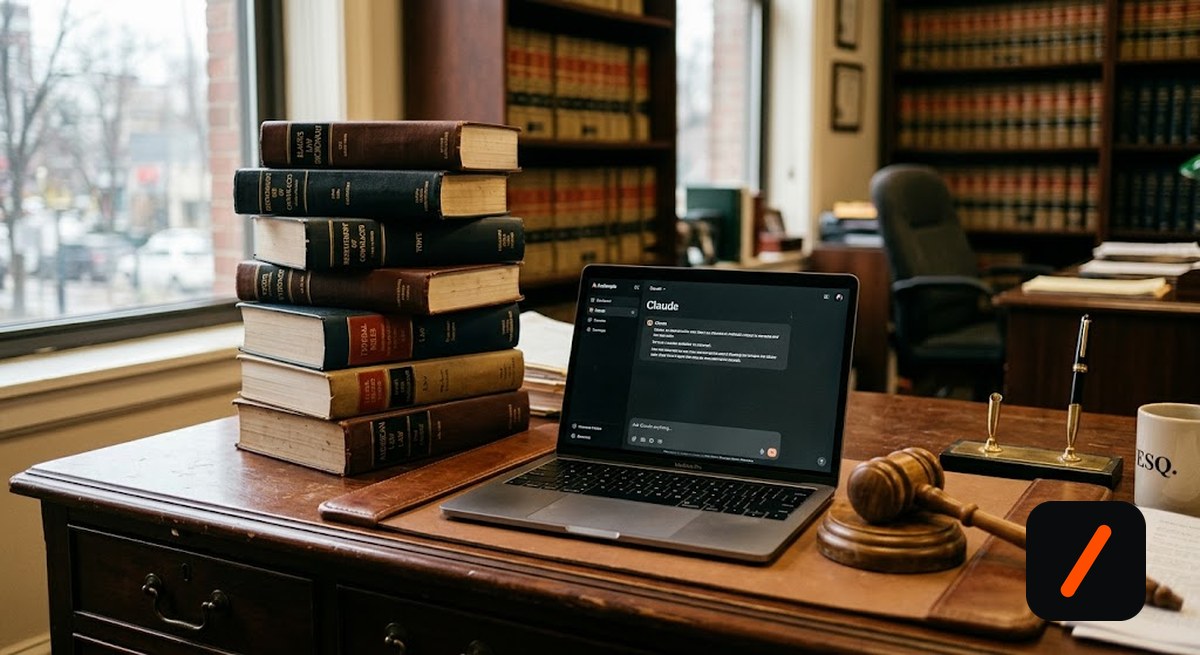
A federal judge granted final approval on Monday to Anthropic's $1.5 billion settlement with book authors, closing the largest copyright recovery in United States history and ending the case that has hung over every AI lab training on scraped text. U.S. District Judge Araceli Martinez-Olguin signed the order in San Francisco, overruling objections that the deal was too small and cutting the plaintiffs' lawyers' fee request by roughly $86 million on the way.
- $1.5 billion, roughly 500,000 works, about $3,000 per book. That per-work figure is the number every other AI copyright plaintiff will now anchor on.
- The fee award landed at $101,561,111, not the $187.5 million requested. The court accepted a 3.75x multiplier on a $27,082,963 lodestar instead of the 6.92x counsel asked for.
- Over 91% of covered authors and publishers had already filed claims before final approval, which is an unusually high response rate for a class this size.
- It sets no precedent. Anthropic settled rather than appeal, so the fair use questions stay open for OpenAI, Meta, Midjourney and everyone else.
What exactly did the judge approve?
The case is Bartz v. Anthropic PBC, 3:24-cv-5417 in the Northern District of California, filed in 2024 by authors Andrea Bartz, Charles Graeber and Kirk Wallace Johnson. Their claim was not that Claude read their books. It was that Anthropic downloaded more than seven million titles from Library Genesis and the Pirate Library Mirror and kept them in a permanent internal library.
RelatedNvidia's $750B AI Deals Just Spooked Its Own Bondholders
That distinction decided the case. In June 2025, Judge William Alsup ruled that training a model on lawfully obtained books is fair use, a genuine win for the industry, but that downloading and warehousing pirated copies was not. Alsup preliminarily approved the settlement in September 2025 and has since retired, which is why a different judge signed the final order. Monday's ruling found the deal "fair, reasonable, and adequate" and dismissed the argument that authors deserved more, writing that objections about the size were "not grounded in a realistic assessment of the overall risks and rewards of a trial."
Why did the fee award get cut by $86 million?
Class counsel asked for $187.5 million, or 12.5% of the fund. The court instead ran the lodestar cross-check: $27,082,963 of actual attorney time, multiplied by 3.75, for $101,561,111. Counsel's request implied a 6.92x multiplier. Citing Kang v. Wells Fargo, the court noted multipliers generally run between 1 and 4 and declined to go past the top of that band.
The $86 million difference does not go back to Anthropic. It stays in the fund, which means the cut is a straight transfer from the lawyers to the authors. On a class of roughly 500,000 works that is real money per claimant, and it is the part of the order most likely to be cited in the next AI settlement.
Is $3,000 a book actually a good outcome?
Copyright's statutory damages run from $750 per work at the floor to $150,000 for willful infringement. At $3,000, the settlement sits four times above the statutory minimum and nowhere near the ceiling. Objectors used exactly that math. The court's answer was that a ceiling is not a forecast: Anthropic had a live appeal on the piracy finding, the class faced a December damages trial, and a verdict theoretically in the hundreds of billions would have been an existential number that no defendant simply writes a check for.
How did the case get here?
- Aug 2024Bartz, Graeber and Johnson sue Anthropic Claim: over 7 million books pulled from pirate libraries
- Jun 2025Alsup splits the question Training on bought books is fair use; storing pirated copies is not
- Sep 2025$1.5B deal, preliminary approval Damages trial had been set for December
- Feb-Mar 2026Opt-out and claim windows close Claims deadline 30 March; 91%+ filed
- 20 Jul 2026Martinez-Olguin grants final approval Objections overruled, fees cut to $101.56M
- NextDistribution to the class Payments proceed promptly; opt-out suits continue separately
What does this mean for the other AI copyright cases?
Less than the headline number suggests. A settlement approved on class action fairness grounds is not a merits ruling, and Anthropic settled precisely so no appellate court would ever weigh in. The three district judges who have ruled on AI training and fair use still disagree: Alsup and Vince Chhabria (in Kadrey v. Meta) came down for the AI companies on training, while Stephanos Bibas ruled against Ross Intelligence. Nobody above them has resolved it.
What does travel is the price tag. Every plaintiff's lawyer now has a $3,000-per-work comparable and a defendant who paid rather than test the piracy theory at trial.
RelatedUnsealed Filings: Microsoft Called AI Training 'Theft of Labor'
| Case | Bartz v. Anthropic | NYT v. OpenAI | Disney v. Midjourney | Kadrey v. Meta |
|---|---|---|---|---|
| Status | Settled, final approval 20 Jul 2026 | Active, sanctions motion filed Jul 2026 | Active discovery | Fair use ruling for Meta on training |
| Core theory | Pirated acquisition, not training | Training plus output reproduction | Character outputs plus training | Training on shadow libraries |
| Money on the table | $1.5B paid | Undetermined | Undetermined | None awarded |
| Precedent set | None, settled pre-appeal | Pending | Pending | District level only |
What it means for the market
Anthropic is private, so there is no ticker to move, but the signal for investors is about how AI legal risk gets priced. Until Monday, the largest known copyright exposure in the industry was an open-ended trial date. It is now a closed, paid, $1.5 billion line item. For a company of Anthropic's scale that converts an unbounded tail risk into a known cost, which is exactly the kind of cleanup that matters to anyone underwriting a private round or a future listing.
The second-order read is on training data economics. The cost of acquiring text legitimately, through licensing deals with publishers, now has a very concrete comparison point: $3,000 per book, paid after the fact, plus roughly $27 million of your opponent's legal time. Labs that paid for licences look less naive this week than they did last year. Watch whether the next round of publisher deals gets priced off this number.
- The opt-outs. Authors who excluded themselves can still sue individually, and they now know what the class rate was.
- The sanctions fight in Manhattan. The newspapers' motion against OpenAI over discovery is the live procedural risk in the biggest remaining case.
- Appellate silence. Until a circuit court rules on training and fair use, every district decision stays persuasive at best.
- Licensing prices. If publisher deals start clustering near $3,000 per title, this settlement became the market rate by accident.
Our take
The interesting part of this order is not the $1.5 billion. It is that the case was never really about whether AI can learn from books. Alsup gave the industry the answer it wanted on training more than a year ago. Anthropic paid a record sum for something much more ordinary: how it got the files. That is a sourcing and procurement failure, not a fundamental limit on machine learning, and it is entirely fixable with a purchase order.
Which is why the celebration on the authors' side should be measured. Rightsholders got the largest copyright payout ever recorded and still did not get a ruling that training on their work requires permission. The labs got to keep the doctrine that matters and paid cash for the part they were plainly caught on. If you are an author, $3,000 a title is real. If you were hoping this case would establish that models owe you a licence, it did the opposite by settling.
- OfficialAnthropic Copyright Settlement, JND Legal Administration court-appointed administrator, case 3:24-cv-5417, claim and works-lookup detail
- AnalysisOrder breakdown: fee award of $101,561,111 on a $27,082,963 lodestar lodestar, multiplier and Kang v. Wells Fargo reasoning
- ReferenceNorton Rose Fulbright: AI copyright cases in 2026 status of the parallel OpenAI, Meta and Midjourney suits
- DataGENZ TECH AI coding leaderboard independently verified scores for Claude and its rivals
Original analysis by GenZTech. Reporting on the final approval order via Engadget and TechCrunch.