
Travis Kalanick has raised $1.7 billion for Atoms, an industrial automation company built by rolling his existing businesses into a single entity. Andreessen Horowitz led the round and Ben Horowitz took a board seat. Bain Capital, Uber, Fifth Wall, Chemistry, A*, K5 Global, Abstract, SV Angel and Alpha Square Group all participated. No valuation was disclosed, which for a round this size is itself a decision.
It is one of the largest private rounds of 2026 and easily the largest for anything described as physical AI. It is also the clearest signal yet that the capital flooding into AI has started looking for places to go that are not another model lab.
RelatedGimlet Labs Raises $300M at $3B to Bet Against Nvidia Lock-In
What is Atoms actually building?
Kalanick's own description is characteristically abstract: atoms-based computers where CPU is manufacturing, storage is real estate, and network is transportation. Translated, Atoms wants to apply software, sensors and robotics to industries that make, move and store physical things. The named targets are food, mining and transport.
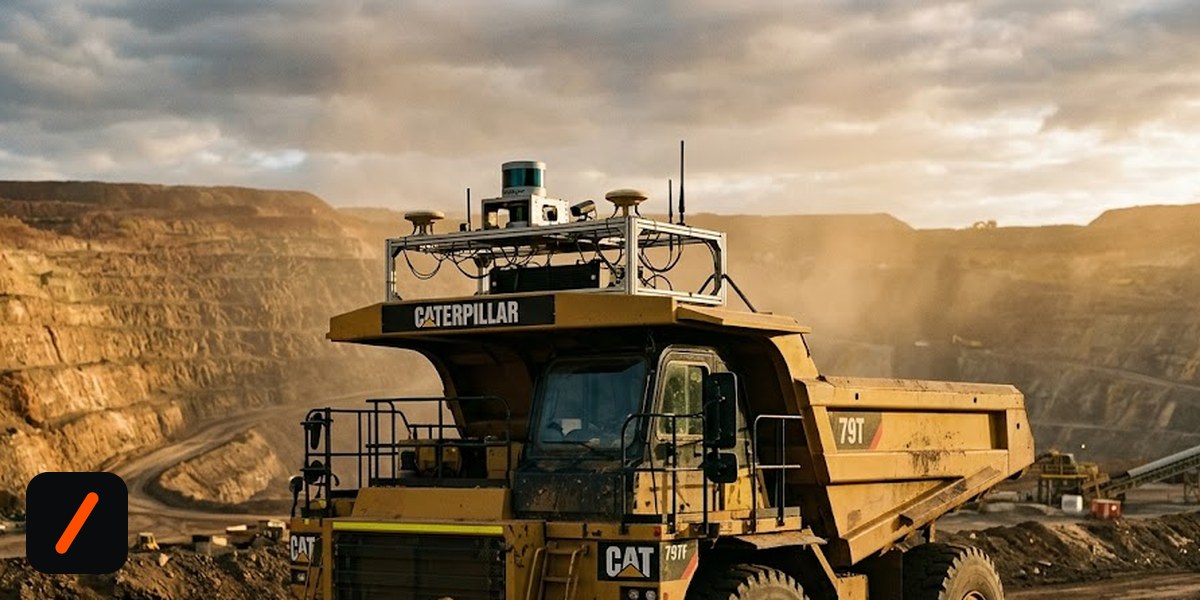
The concrete assets underneath are less abstract. CloudKitchens, Kalanick's ghost-kitchen operation, brings real estate and food logistics at scale. Pronto, the heavy-industry automation company he acquired from former Uber colleague Anthony Levandowski, brings autonomous haulage for mining sites. The stated near-term engineering goal is a wheelbase for robots, a common chassis and control layer that different machines can be built on top of.
Why does the missing valuation matter?
Rounds of this size almost always come with a headline number, because the number is the marketing. Withholding it usually means one of two things. Either the valuation is high enough to attract mockery, or the structure is complicated enough that a single figure would be misleading.
Here the second explanation is more plausible. This round consolidates prior businesses under one equity umbrella, which means existing CloudKitchens and Pronto shareholders are being rolled into Atoms at some negotiated exchange. A post-money figure on a rollup does not describe the same thing a post-money on a normal Series C does. Worth remembering that CloudKitchens was last reported around a $15 billion valuation and has since faced sustained questions about occupancy and unit economics, so an honest mark could involve a markdown on part of the portfolio alongside fresh money at a higher price on another part.
What it means for the market
The most direct public-market exposure is Uber, which participated in the round. That is a small position for a company Uber's size and it will not move the stock, but the signal is interesting: Uber is putting money into its founder's new logistics-automation venture rather than treating it as a competitor. Autonomous haulage and food logistics both sit adjacent to Uber Freight and Uber Eats, and an investor stake is a cheap option on that adjacency.
The broader read is about where AI capital rotates next. Model-layer valuations have been absorbing most of the funding for three years, and returns there increasingly depend on winning a benchmark race with compressing margins. Physical AI is the pitch that the same techniques applied to mining trucks and commercial kitchens face less competition, longer contracts and customers who measure value in labour hours rather than tokens. a16z putting $1.7 billion behind that thesis, with a general partner on the board, is the largest institutional vote that argument has received.
The signal for investors watching adjacent names is that industrial automation suppliers and the sensor and lidar supply chain get a demand story they did not have last quarter. The signal for anyone underwriting robotics startups is that the bar for a seed round in this category just moved, because a well-capitalised incumbent now exists in a space that had none.
Does the Kalanick discount still apply?
Kalanick left Uber in 2017 after a governance collapse that has been written about at book length. The a16z framing is that the rare kind of entrepreneur who changes old-school, heavy parts of the economy needs gritty work ethic, drive and range, which is a polite way of saying the traits that made him difficult are the traits being bought.
RelatedPixxel Raises $100M in India's Largest Spacetech Round
Kalanick describes the investment as unfinished business, pointing back to a near-partnership with Marc Andreessen and Ben Horowitz at Uber in 2011 that did not happen. Fifteen years later they closed it. Whether that reads as vindication or as a warning depends largely on what you thought of the first company, and the answer will be settled by whether Atoms ships working autonomy into mines rather than by anyone's read on the founder.
The operational question is harder than the reputational one. CloudKitchens and Pronto serve genuinely different customers with different sales cycles, capital intensity and regulatory surfaces. Mining autonomy is a long procurement with safety certification attached. Ghost kitchens are a real-estate business with thin margins and high churn. The shared wheelbase thesis says one robotics platform serves both. Rollups usually discover that the shared layer is thinner than the pitch deck claimed.
- A deployment number, not a demo. The metric that matters is autonomous haul trucks running production shifts at named mine sites. Pronto has customers; the question is how many and how many hours.
- Whether the wheelbase is real. If Atoms ships one chassis serving both mining and kitchens within 18 months, the rollup logic holds. If the two divisions stay separate, this was a financing structure rather than a technology strategy.
- CloudKitchens marks. Any disclosure of how the existing business was valued in the roll-in would tell you more about this deal than the $1.7 billion headline.
- Follow-on rounds in physical AI. Watch whether this pulls a wave of large robotics rounds or stands alone as an outlier priced on the founder.
Our take
The thesis is sound and the execution risk is enormous, which is roughly the correct profile for a $1.7 billion bet. Applying modern perception and control to heavy industry is genuinely underserved, the customers have real budgets, and unlike consumer AI the value is measurable on day one in shifts worked and tonnes moved.
What gives us pause is the shape rather than the sector. This is a holding company assembling businesses that share a founder more obviously than they share a technology. Rollups of that kind tend to be justified by a platform layer that arrives later than promised, and the absence of a valuation makes it harder to judge what was actually paid for what. The named investor list is strong enough that plenty of sophisticated people looked at the internals and were satisfied, which counts for something.
Judge it in eighteen months on autonomous shifts logged, not on the round size. The round size is the easy part in 2026.
- FundingTechCrunch: Travis Kalanick's robotics company raises $1.7B, led by a16z round size, investors, board seat, Pronto and CloudKitchens roll-in
- ReferencePYMNTS: Kalanick's Atoms secures $1.7 billion to build physical AI full participating investor list and sector targets
- ContextGenZTech Funding Tracker every round we have logged this year
- ContextBiggest AI funding rounds, ranked where $1.7B sits against the rest of 2026
Original analysis by GenZTech. Round details and quotes as reported by TechCrunch on July 22, 2026. No valuation was disclosed by the company.