
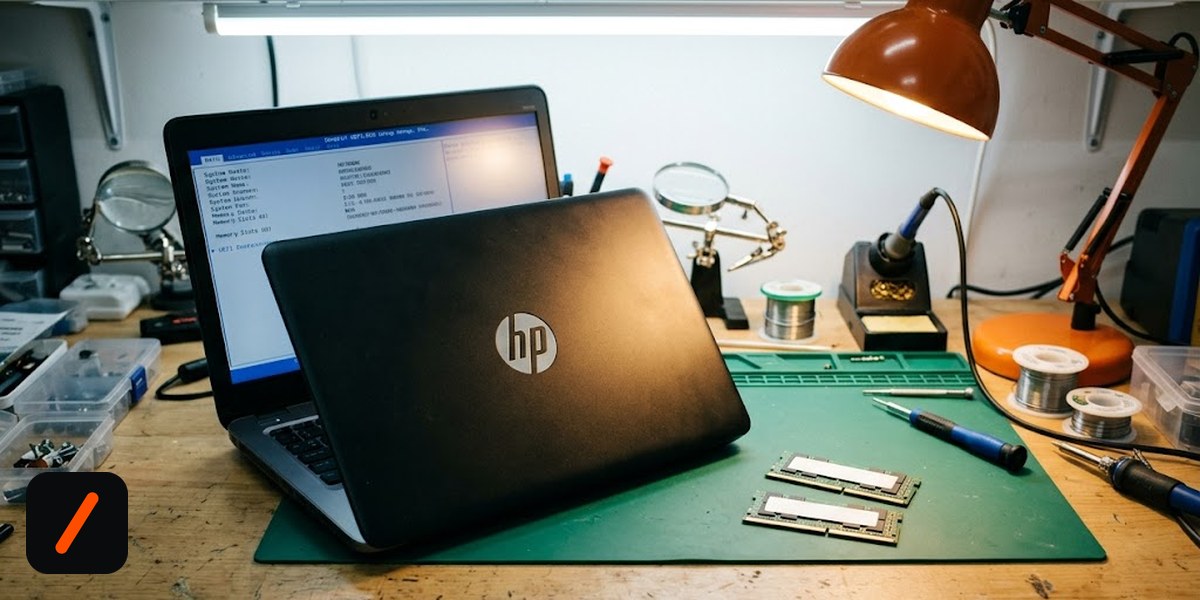
Three of the world's largest PC makers have started putting Chinese memory in their laptops. HP, Asus and Acer have qualified DRAM from ChangXin Memory Technologies and are shipping it in small volumes, in a handful of notebook models sold outside the United States. None of them announced it. Reporting surfaced it on August 5.
The reason is arithmetic, not politics. AI data centre buildouts are on track to consume roughly 70% of all memory chip production in 2026. DRAM contract costs have tripled in eighteen months. The PC industry is forecast to shrink more than 11% this year, and that decline is not about demand for laptops. It is about not being able to buy the parts.
RelatedThe Memory Supercycle Is Here, and AI Priced Everyone Out of RAM
Why take Chinese DRAM that is not even cheaper?
This is the detail most coverage skips, and it inverts the usual China story. CXMT's DRAM does not undercut Samsung on price. PC makers are not chasing a discount; they are chasing supply. When the three incumbent suppliers have allocated most of their output to hyperscalers on long-term contracts, a fourth vendor with product on a truck is worth paying market rate for.
Which also explains the volumes: small, and only in models sold outside the US. HP, Asus and Acer are threading a needle. They need parts, but they cannot afford to look like they are diversifying away from Micron, Samsung and SK Hynix during the exact window when those three decide who gets allocation next quarter. Qualifying a second source and then barely using it is a hedge, not a switch.
What Washington is doing about it
On July 30, a bipartisan group of seven senators wrote to Apple CEO Tim Cook demanding a formal commitment that no CXMT or YMTC memory will appear in any Apple product, sold in the United States or abroad. They set a deadline of August 21, 2026. Apple was singled out, but the letter is really addressed to the whole category, and HP, Asus and Acer have just supplied the reason it exists.
The security concern raised alongside the commercial one is worth stating precisely, because it is easy to caricature. It is not that CXMT modules contain backdoors; no such finding has been published. It is that vulnerability handling in Chinese-manufactured components runs through a disclosure regime where domestic authorities learn of flaws before foreign customers can patch them. That is a timing asymmetry in the patch pipeline, not an allegation of sabotage, and it is a reasonable thing for a procurement officer to weigh.
| Samsung | SK Hynix | Micron | CXMT | |
|---|---|---|---|---|
| Base | South Korea | South Korea | United States | Hefei, China |
| In US-market PCs | Yes | Yes | Yes | No |
| Shipping in HP / Asus / Acer notebooks | Yes | Yes | Yes | Yes, small volumes, non-US |
| Price vs incumbents | reference | comparable | comparable | not cheaper |
| US political exposure | Low | Low | None | High, active Senate scrutiny |
What it means for the market
The signal for investors is that CXMT's arrival does not break anyone's pricing power. Volumes are small, prices are at parity, and US-market products are untouched. Micron, Samsung and SK Hynix keep the ability to allocate scarce supply to whichever customer pays most, which right now is a hyperscaler buying HBM rather than a laptop OEM buying DDR5. Micron is the cleanest way to watch this: it is the US-listed pure play, it has no exposure to the Chinese substitution risk, and its allocation decisions are what actually set notebook memory availability.
The number that would change the read is CXMT qualification moving from "a handful of models" to a named product line, or into a US-market SKU. Neither has happened. The second thing to watch is the August 21 Apple deadline: a firm public commitment from Apple sets a de facto industry standard that HP, Asus and Acer will be asked to match, and would cap this trend before it compounds.
For PC buyers the practical effect is duller and more immediate. Memory-heavy configurations stay expensive, entry-level machines keep shipping with less RAM than they did two years ago, and the upgrade you are deferring is unlikely to get cheaper in 2026. This is analysis rather than investment advice, and memory is a famously cyclical business that has humbled better forecasters.
Related$1B of iPhone 18 Pro Chips Are Stuck Waiting on DRAM
- 2024-25AI buildout absorbs HBM and then conventional DRAM capacity contract prices begin climbing
- H1 2026DRAM costs reach roughly 3x their level 18 months earlier PC market forecast to fall over 11%
- Jul 30 2026Seven senators write to Apple over CXMT and YMTC memory demand a formal commitment
- Aug 5 2026HP, Asus and Acer confirmed shipping CXMT DRAM small volumes, non-US notebook models
- Aug 21 2026Apple's deadline to respond sets the reference standard for the rest of the industry
Does this actually fix the shortage?
No, and it is worth being blunt about the scale. A handful of notebook models in non-US markets does not offset an allocation shift that has redirected most of an industry's output to AI infrastructure. CXMT is a pressure release on one product line at three companies. It buys those companies the ability to keep certain SKUs in stock, which matters commercially, and changes nothing about the underlying supply picture.
What it does mark is a threshold. Chinese DRAM crossing into products from top-tier Western PC brands, even quietly and even at parity pricing, is the kind of thing that only happens when the alternative is empty shelves. That the three companies did it without a word of announcement tells you they know exactly how it reads.
- August 21. Apple's answer to the Senate letter becomes the industry reference point whether Apple intends that or not.
- Scope creep. Watch for CXMT appearing in a named product line rather than unspecified models, or in a US-market SKU. Either would be a genuine escalation.
- An import restriction. A formal rule on Chinese memory would remove the relief valve entirely and make the 2027 PC market worse, not better.
- The AI allocation share. If the ~70% figure rises in 2027 guidance, expect more OEMs to quietly qualify second sources on the same terms.
Our take
The framing to resist is that this is a story about Chinese chips beating Western ones on price, because they did not. It is a story about what a genuine scarcity does to procurement discipline. HP, Asus and Acer are not making a bet on CXMT. They are making a bet that shipping laptops with available memory beats not shipping laptops, and they are hedging that bet at a volume small enough to walk back.
The part that should worry policymakers is not the memory in these particular notebooks. It is that a supply squeeze created a commercial reason to qualify a Chinese supplier, and qualification is the expensive, slow part. The volumes are trivial today. The engineering work that makes them non-trivial tomorrow is already done.
- ReportSemafor: Major PC makers turn to China's CXMT — original reporting on the qualification
- ReportThe Wire China: the memory supply crunch — background on CXMT capacity
- ReportThe Register: what a Chinese memory ban would do — the policy trade-off
Original analysis by GenZTech. Qualification and volume details first reported by Semafor.