
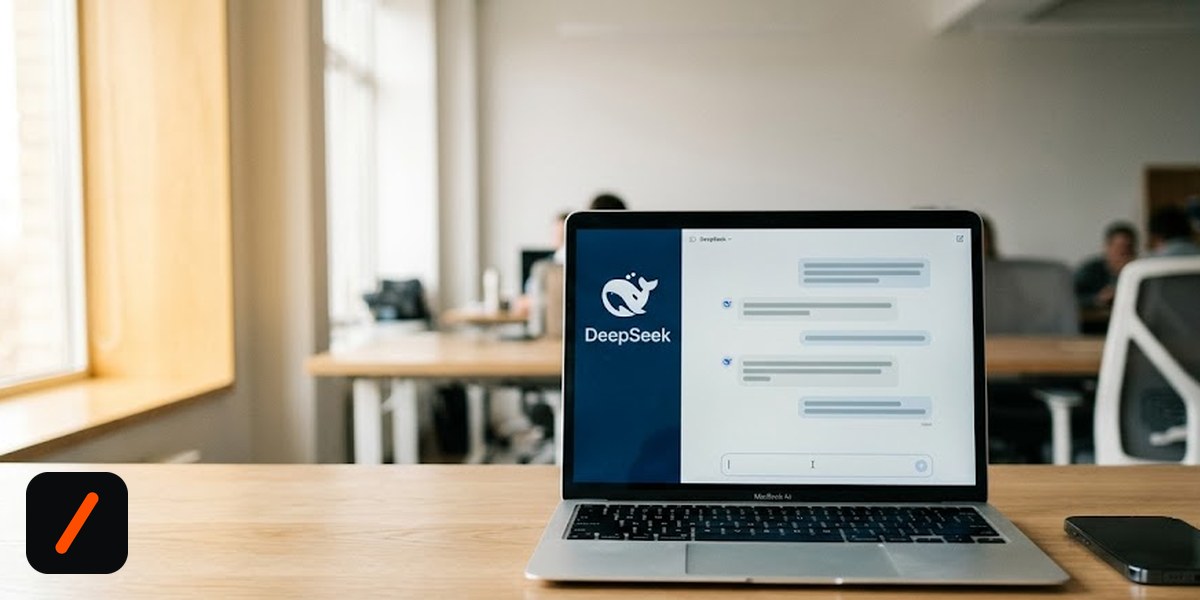
DeepSeek has put its newest funding round on hold, Bloomberg reported on Saturday, telling prospective investors that agreements expected to be signed within days would not be finalized. The round was seeking at least 10 billion yuan, about $1.5 billion, at a pre-money valuation of roughly 480 billion yuan, or around $71 billion. Nothing about the company's models, revenue or roadmap caused the pause. A leaked transcript did.
The document circulating since last week purports to be a record of a four-hour meeting between founder Liang Wenfeng and investors, held in May during the company's first external raise. Remarks attributed to him in it spread widely on Chinese social platforms, and Liang was reportedly unhappy with how they were characterized. Within days, a nearly-closed round stopped moving.
RelatedNvidia in Talks to Invest in Perplexity at $30B+ Valuation
- DeepSeek told prospective backers that planned investment agreements would not close in the coming days, per Bloomberg on July 25, 2026. The company may restart the process later.
- The paused round sought at least 10 billion yuan (about $1.5 billion) at a pre-money valuation near 480 billion yuan (about $71 billion).
- It came only weeks after DeepSeek completed its first external round, roughly $7 billion backed by Tencent, CATL and China's state-backed national AI fund.
- The trigger was reputational, not financial: a leaked transcript in which Liang is said to describe compute access as the entire gap between Chinese and American labs.
What was actually in the leaked transcript?
The core claim is blunt. Every difference people point to between Chinese and US labs, the talent, the model quality, the applications, reduces to one input. "All the differences we see, including talent, model capability, and applications, can be attributed to differences in compute resources," Liang is quoted as saying. That is a striking thing for a founder to tell investors, because it says the company's ceiling is set by something it cannot buy under current US export controls.
The specifics are what made it travel. The transcript puts DeepSeek's fleet at roughly 20,000 Nvidia H-series equivalent GPUs and describes the company as operating on about one twentieth of a US frontier lab's compute. Depending on which version you read, the capability gap is put at 12 to 18 months or at two years, with a stated ambition to compress it to three to six months. There is also a line about spending: 20 billion yuan in a year would count as an exceptional procurement result, and doing even that is "extremely difficult." Money is not the constraint. Chips are.
Then there is Huawei. Liang is quoted saying the Huawei 950 super-node "can fully replace Nvidia's GB200 and GB300 in performance and price," while also saying four Huawei chips are needed to match one Nvidia chip, and that on silicon itself the gap is "fourfold plus two years." Those two statements coexist because they describe different levels: a rack-scale system where you can throw more dies at the problem, versus the per-chip economics underneath it.
Why would a leak stop a round that was days from closing?
Because of who reads it. A Chinese AI champion raising from Tencent, CATL and a state-backed national fund sits inside an industrial policy story, and that story says domestic silicon is closing the gap. A transcript in which the country's most celebrated AI founder says the gap is compute, that it is measured in years, and that Huawei parts run four to one against Nvidia, cuts against the official line at an awkward moment. It also happens to be a fairly precise disclosure of a private company's infrastructure position, delivered to the public without the company choosing to deliver it.
Investors reading the same document get a different problem. They were being asked to underwrite a valuation roughly a fifth higher than six weeks earlier. The transcript makes the bull case dependent on chip supply that DeepSeek does not control, which is exactly the risk a rising mark is supposed to be pricing down, not up.
- May 20, 2026Investor meeting held The session later reproduced in the circulated transcript
- Early June 2026First external round reported Roughly 50bn yuan sought; Tencent, CATL, national AI fund, NetEase and JD.com named
- June 2026Round completes at about $7B A record for a Chinese AI startup
- Mid-July 2026Transcript goes viral Remarks attributed to Liang spread on Chinese platforms; he is reported to be dissatisfied with the coverage
- July 25, 2026New round paused Backers told the $1.5B agreements will not be signed as planned
- UnscheduledPossible restart Sources say the process may resume later
| June round | July round | |
|---|---|---|
| Size | ~50bn yuan (~$7B) | 10bn yuan+ (~$1.5B) |
| Valuation | 350bn to 400bn yuan post-money | ~480bn yuan pre-money |
| Named backers | Tencent, CATL, national AI fund, NetEase, JD.com | Not disclosed |
| Founder participation | Liang committed 20bn yuan of his own | Not disclosed |
| Status | Completed | Paused |
How solid are the Huawei chip claims?
Treat them as a participant's assessment, not a benchmark. Nobody outside a handful of Chinese datacenters has run a Huawei 950 super-node against a GB200 rack under conditions anyone can inspect, and the "four to one" ratio is a rough per-chip shorthand rather than a measured throughput result. What makes the claim interesting is the direction, not the decimal. A four to one deficit that can be papered over with more dies and more power is an engineering tax, and an expensive one, but it is not a wall. The CUDA point matters for the same reason: if the software moat erodes, the switching cost that keeps Chinese buyers on Nvidia erodes with it, and the remaining gap becomes something you can pay down with electricity.
RelatedChina Bets $532B, 9,800 Exaflops on a National AI Compute Plan
What it means for the market
For Nvidia, the signal is mixed and mostly not new. A Chinese lab saying it runs on one twentieth of US compute is confirmation that export controls are biting, which supports the case that Chinese demand is a capped opportunity rather than a growth engine. The offsetting read is that a customer publicly costing out Huawei alternatives is what substitution looks like early. Neither is a same-week move in the stock; both belong in the pile of evidence about how durable the China revenue line is.
For the investors already in from June, a paused follow-on at a higher mark is not a markdown. It is an unrealized step-up that did not happen, which changes paper math and nothing else. The thing worth watching is whether the round restarts at 480 billion yuan or at a number closer to June's. A restart at the same valuation says the pause was about message control. A restart lower says the transcript actually repriced the risk. For our running record of the largest rounds in this cycle, see the Funding Tracker and the ranked biggest AI funding rounds.
- The restart price. Whether the round comes back at 480bn yuan tells you if this was reputational or substantive.
- A DeepSeek denial. The company has not authenticated the transcript. A specific, line-level rebuttal would be more informative than silence.
- Huawei 950 deployments. Real fleet numbers at a named Chinese lab would turn the four-to-one claim into something measurable.
- The next model. The transcript's whole argument is that DeepSeek is compute-bound, not idea-bound. The next release is the test of that.
Our take
The interesting part of this story is not that a Chinese AI company hit a funding snag. It is that the snag came from a document nobody has authenticated, containing claims that are, on their face, an argument for why DeepSeek is undervalued rather than overvalued. Being 12 to 24 months behind on one twentieth of the compute is a remarkable efficiency result if true. That it still froze $1.5 billion says the constraint on Chinese AI financing right now is as much narrative as it is silicon.
We would also flag the obvious: a four-hour private meeting reproduced in a translated PDF on GitHub is not a primary source, and the numbers drift between versions. The Bloomberg reporting on the pause is solid and multiply confirmed. The transcript underneath it is not. Those deserve different levels of confidence, and most coverage this weekend has been collapsing them into one.
- ReportingBloomberg: DeepSeek Suspends Fundraising After Viral Posts the originating report on the pause
- ReportingFortune: DeepSeek said to tell backers of funding pause independent confirmation of the terms
- ReportingCNBC: DeepSeek slated to draw $7 billion in maiden fundraising the June round and its investor list
- TranscriptMomentum Works: full circulated transcript unauthenticated, treat as attributed remarks
- ReferenceGENZ TECH Funding Tracker our running record of the cycle's largest rounds
Original analysis by GenZTech. Reporting on the funding pause via Bloomberg.