
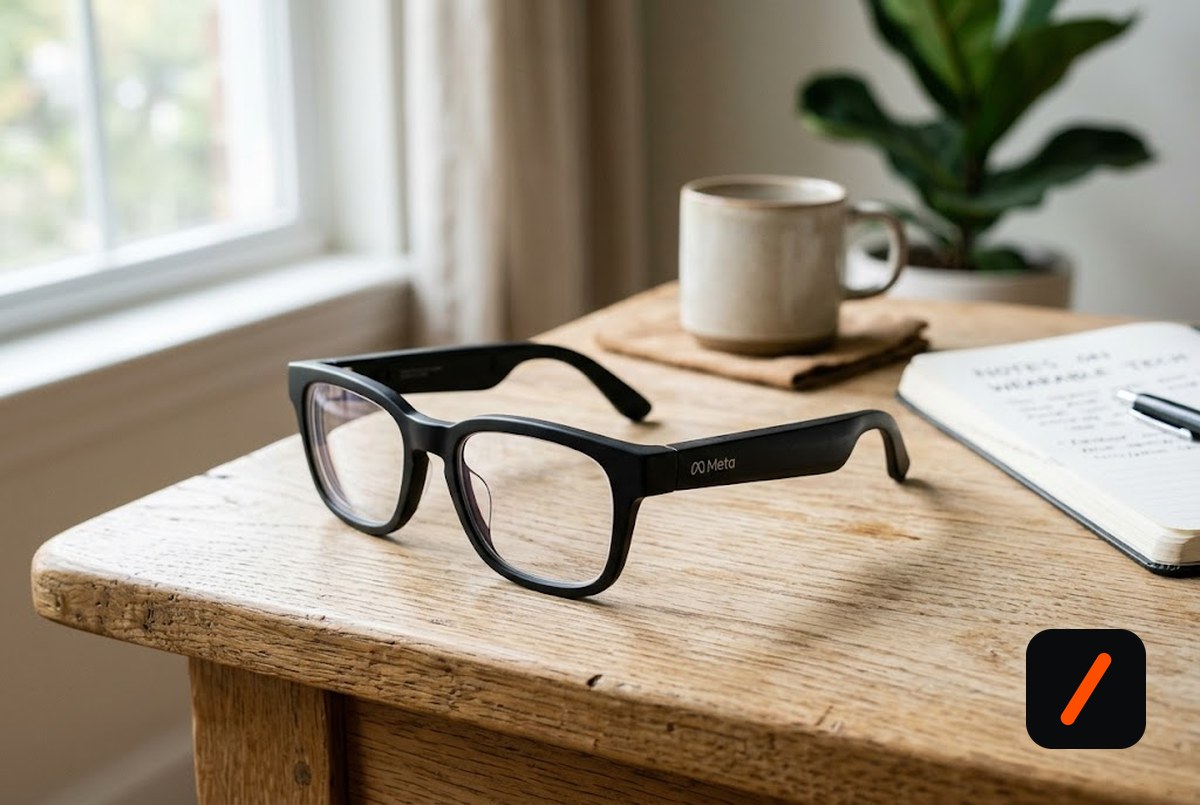
Meta launched Meta Glasses on June 23, its first smart eyewear designed entirely in-house, starting at $299 and running a new on-device AI model called Muse Spark. The move drops the Ray-Ban and Oakley branding Meta leaned on for years and signals that the company now sees AI glasses as a core product line it wants to own end to end, not a co-branded accessory.
- Meta Glasses start at $299 across three frame styles: Meta Adventurer, Meta Fury, and a Kylie Jenner collaboration at $399.
- They are Meta's first in-house-designed eyewear, a break from the EssilorLuxottica Ray-Ban and Oakley partnerships.
- Every model runs Muse Spark, Meta's newest AI, with a 12MP ultrawide camera, open-ear speakers and 8-plus hours of battery.
- Meta already holds roughly 69% of the smart-glasses market, and plans up to four new models across 2026.
What did Meta launch?
Meta Glasses arrived on June 23 as a collection of three frame styles: the Meta Adventurer, the Meta Fury, and a slimmer oval design made with influencer Kylie Jenner at $399, with the line starting at $299. There are 26 style combinations across colors and lenses, and the frames accept prescription lenses. Every model carries a 12MP ultrawide camera, open-ear speakers, over eight hours of battery, and Meta AI powered by Muse Spark, the company's newest model. Meta is also adding pedestrian navigation for displayless glasses and expanding live translation to fourteen new languages including Japanese, Mandarin, Hindi and Korean.
RelatedMeta Closes the Loophole Letting Ray-Ban Glasses Record Covertly
Why drop the Ray-Ban branding?
For years Meta shipped its camera glasses under EssilorLuxottica's Ray-Ban and Oakley names, borrowing the fashion credibility of established eyewear brands to make a computer on your face feel normal. Designing in-house is a statement that the strategy worked and the training wheels are off. Owning the design lets Meta control the industrial design, margins and roadmap, iterate faster across multiple models a year, and build the frames around the AI and sensors rather than retrofitting electronics into someone else's shape. Keeping the Jenner collaboration shows Meta still values celebrity reach, but the core product is now unmistakably Meta's own.
| Device | Meta Glasses | Ray-Ban Meta Gen 2 | Snap Specs |
|---|---|---|---|
| Starting price | $299 | $299-$499 | $2,195 |
| Design | Meta in-house | EssilorLuxottica | Snap |
| Display | Displayless (audio + camera) | Displayless | Spatial AR display |
| On-device AI | Muse Spark | Meta AI | Snap OS |
| Positioning | Mass-market AI wearable | Mass-market | Premium AR |
What does Muse Spark actually add?
The AI is the reason these are not just camera sunglasses. Muse Spark handles the assistant that answers questions about what you are looking at, drives the expanding live translation, and powers features like the incoming pedestrian navigation for glasses without a screen. The bet is that a hands-free, always-available assistant with a camera and your point of view is a genuinely new interface, one that native apps on a phone cannot match. Whether that clears the bar of everyday usefulness rather than novelty is the open question, but Meta is iterating on it faster than anyone, and doing so at a price most people can actually justify.
Who competes, and what is next?
The competitive picture is lopsided today and heating up fast. Snap's Specs sit at the premium end at $2,195 as a spatial computing device rather than a mass-market accessory. Samsung is expected to reveal its Gemini-powered Galaxy Glasses, co-designed with Gentle Monster, at Unpacked on July 22, and Google is bringing Android XR glasses to market with both audio-only and in-lens display models. Apple, by most reporting, will not ship glasses until late 2027. Meta plans as many as four new models across 2026, with the remaining reveals expected around Meta Connect on September 23 and 24. The category is about to get crowded, but Meta enters it from a position of overwhelming strength.
RelatedSnap's $2,195 Specs Bet AR Glasses Beat the Phone
- Samsung and Google. The July 22 Galaxy Glasses reveal and Android XR glasses are the first credible challenges to Meta's lead.
- Muse Spark utility. The make-or-break test is whether the on-glasses AI is useful daily or just a demo.
- Displayless vs display. Meta bets audio and camera are enough for now; rivals are pushing in-lens displays.
- Connect reveals. The remaining 2026 models drop around late September; watch for a display-equipped SKU.
Our take
Going in-house is the natural next move for the company that already dominates smart glasses, and doing it at $299 keeps the product firmly in mass-market territory rather than chasing expensive AR spectacle. The hardware is table stakes; the real contest is whether Muse Spark makes a camera-equipped assistant on your face useful enough to wear every day. Meta has the market share, the price, and the fastest iteration cadence in the category, which is a formidable combination. The pressure now comes from Samsung and Google, and the interesting question is not whether Meta leads in 2026, but whether a screenless assistant is the right bet once rivals ship real in-lens displays.
- OfficialMeta Reality Labs product announcements and specs
- ReferenceIDC wearables tracker smart-glasses market share data
Original analysis by GenZTech. Pricing and specs as announced June 2026.