
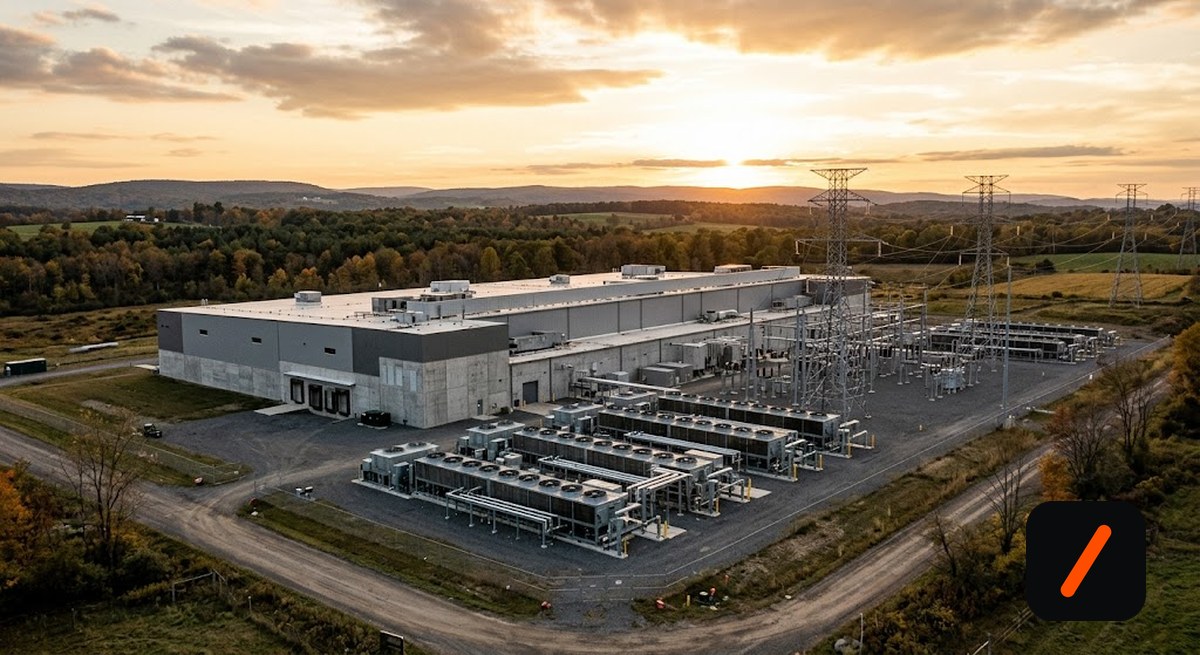
New York just became the first state in the country to freeze new AI data centers. Governor Kathy Hochul signed an executive order Tuesday morning that immediately pauses environmental permits for any data center drawing 50 megawatts or more, for up to a year, while the state writes new rules on energy, water, and cost. It is the sharpest sign yet that the political mood around the AI buildout has flipped: the same hyperscale facilities states once chased for investment are now a liability at the ballot box.
- The order took effect on signing July 14, 2026, and halts state environmental permitting for large data centers (50 MW and up) for up to 12 months.
- During the pause, the Department of Environmental Conservation writes a statewide Generic Environmental Impact Statement setting consistent standards for energy demand, water use, and air quality.
- Hochul chose an executive order over the legislature's own moratorium bill, which sets a stricter 20 MW line but was deemed too complex to sign as written.
- New York is not a top hyperscale destination today, so the immediate build impact is small; the precedent for other states is the real story.
What did New York actually do?
Hochul signed an executive order that immediately pauses state environmental permitting for large data centers, defined as facilities with a peak load of 50 megawatts or more, for up to one year. The pause is not a permanent ban. Its purpose is to buy time for the Department of Environmental Conservation to produce a statewide Generic Environmental Impact Statement, a single framework that sets consistent standards for how these facilities are reviewed instead of leaving each project to a patchwork of local decisions. That statement will assess energy demand, water use and quality, and air quality. The order also directs the state, within 60 days, to give localities guidance on negotiating community benefits with operators, things like infrastructure upgrades, child care investment, or direct payments. And it signals that operators should expect to pay a premium for the extra power they consume or to generate their own, rather than pushing those costs onto ordinary ratepayers. In her statement, Hochul said data center development "threatens to hike up utility bills, deplete our natural resources, and create uncertainty for New Yorkers," and that it was her "responsibility to take action and lead."
RelatedGoogle Launches Four TPUs Into Orbit With Project Suncatcher
Why an executive order instead of the bill?
The legislature already passed its own one-year moratorium last month, the Responsible Data Center Development Act, which cleared the Senate 44 to 16 and the Assembly 102 to 39. That bill draws its line lower, at 20 megawatts, and goes further: it would create new electricity and water rate classes for data centers and require a public hearing before any future permit. But Hochul's office called the legislation complex and said it needed more work before she could sign it. Rather than wait, aides framed executive action as the fastest way to get something on the books now, with the bill still on the table for later refinement. The practical effect is two moratoriums in motion at once: a signed order at 50 MW that is live today, and a tougher legislative version at 20 MW that is negotiated but not yet enacted.
| Measure | Executive order (signed) | Legislature's bill (passed, unsigned) |
|---|---|---|
| Threshold | 50 MW or more | 20 MW or more |
| Status | In effect July 14, 2026 | Passed both houses, awaiting action |
| Duration | Up to 1 year pause | 1-year moratorium |
| New rate classes | Signals cost premium | Creates electric and water rate classes |
| Public hearing rule | Local benefit guidance in 60 days | Hearing required before each permit |
Why does this matter beyond New York?
Because the fight it represents is national, and New York is the first state to actually win it. Moratoriums on data centers have been proposed in at least a dozen states, and almost all have stalled. Maine came closest earlier this year before Governor Janet Mills vetoed the measure, worried it would block a project in a town hit hard by a mill closure. Counties and municipalities have imposed their own temporary bans, but no state had drawn a statewide line until now. What changed is the politics. Data centers were once an economic-development trophy; now the power and water they consume have collided with voters' utility bills, and affordability has become the dominant issue. New York's move gives every other governor a template to copy, which is why the tech industry is watching a state that barely hosts hyperscale capacity so closely.
- Jun 4 2026Legislature passes its 20 MW moratorium bill Senate 44-16, Assembly 102-39
- Jul 14 2026Hochul signs executive order at 50 MW permits paused, effective immediately
- +60 daysCommunity-benefit guidance for localities due infrastructure, child care, direct support
- Within 1 yrDEC completes statewide impact statement energy, water, and air standards
What it means for the market
The direct hit is small because New York is not where the biggest AI data centers get built. The exposure that matters is the precedent. Hyperscale operators like Microsoft, Amazon, Google, and Meta plan capacity years ahead, and a wave of state-level permitting pauses would lengthen timelines and raise the cost of siting, especially for power. Utilities and independent power producers positioned to supply data center load, names investors have bid up on the AI-electricity thesis, are the clearest read: a moratorium that forces operators to pay a premium for supply or self-generate reshapes who captures that demand. The signal for investors is not this one order in a minor market; it is whether Virginia, Texas, Ohio, and Georgia, the states that actually host the buildout, adopt similar affordability-driven limits. That is the variable that would move data center REITs, grid-equipment suppliers, and the power names at once. This is analysis, not investment advice.
RelatedAMD's Zen 6 EPYC 'Venice' Lands July 22 With 256 Cores
- Copycat states. Whether governors in Virginia, Texas, or Ohio, where hyperscale actually clusters, follow New York's lead.
- The bill vs the order. If Hochul eventually signs the stricter 20 MW legislation, tightening the line she just drew.
- Who pays for power. How the coming rules split energy and water costs between operators and ordinary ratepayers.
Our take
This is the moment the AI infrastructure boom hit its first real political wall, and it came from an affordability argument, not an environmental one. For two years the story was states competing to land data centers with tax breaks and fast permits. Hochul just inverted it: the facilities are now a cost to be managed, priced, and slowed. The 50 MW executive order is deliberately narrower than the legislature's 20 MW bill, which tells you she wants leverage and speed more than maximal reach. The genuinely important detail is the premise that operators, not households, should pay for the extra grid capacity their compute demands. If that principle spreads to the states where hyperscale really lives, it changes the economics of the buildout far more than any single permit pause in New York ever could.
- OfficialOffice of Gov. Kathy Hochul executive order and press release on the data center moratorium
- ReportingAxios Hochul signs first statewide data center moratorium
- ReferenceNY Senate Responsible Data Center Development Act (S10642)
Original analysis by GenZTech. Details current as of July 2026. Source: Axios.