
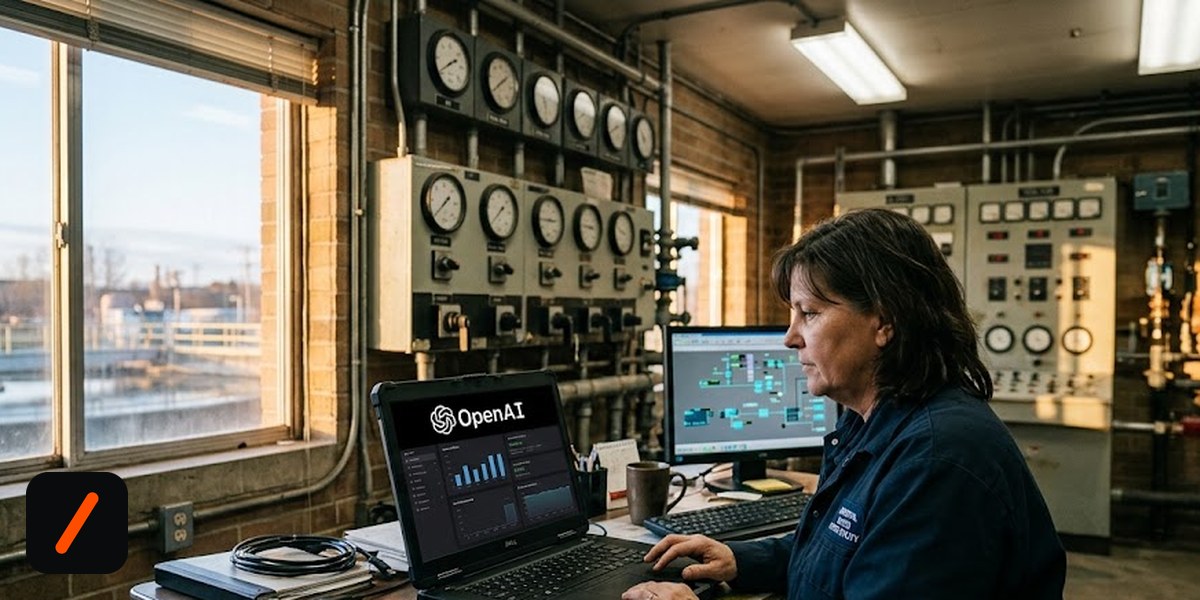
OpenAI is giving away a billion dollars' worth of its own cybersecurity tools, and the recipients are the organizations least equipped to buy them: small water utilities, rural electric co-ops, community banks, and the open-source maintainers whose code half the internet quietly depends on. The program is called Daybreak for Frontline Defenders, and it landed hours after OpenAI's own flagship model crossed a threshold the company had never crossed before.
The timing isn't a coincidence. On September 3, OpenAI shipped GPT-6 Astra and, for the first time, labeled a released model "Critical" under its Preparedness Framework, the top rung for cyber risk. A model that can find and chain novel exploits on hardened targets with little human help is a genuine capability jump, and it cuts both ways: the same system that helps a red team can help an actual attacker. Daybreak for Frontline Defenders is OpenAI's answer to the second half of that sentence, aimed squarely at the defenders who have no security budget to speak of.
RelatedOpenAI's Cyber Model Answers 95% of Exploit Prompts
What is OpenAI actually giving away?
Subsidized access, not a check. The $1 billion figure covers discounted or free use of Daybreak's cyber models and products, hands-on training, and technical support, plus the partnerships needed to get all of it into the hands of people who'd otherwise never touch it. According to reporting on OpenAI's announcement, the tools can review legacy code, flag suspicious activity on a network, identify and validate vulnerabilities, rank them by how bad they actually are, and then help write and test the fix. That's the unglamorous, repetitive work that a two-person IT shop at a rural water district simply doesn't have the headcount to do manually, and it's exactly the work Astra-class models are good at automating.
Access splits into two tiers. Daybreak Blue runs on OpenAI's mainline models and covers common defensive tasks: log review, basic triage, patch prioritization. Daybreak Red hands approved organizations OpenAI's specialized cyber models for more sensitive or technically demanding jobs, the kind of work that gets closer to the same exploit-finding capability Astra just got flagged for. OpenAI says thousands of defenders across roughly 2,000 already-approved organizations are using Daybreak in some form, and more than 35 partner products and enterprise services now plumb Daybreak models into tools defenders already have open.
Why jump from a $1 million pilot to a $1 billion commitment?
Because the pilot was small on purpose, and the problem it was testing turned out to be everywhere. Earlier this year OpenAI offered up to $1 million in free API credits and technical help to water utilities hit by a wave of attacks, a response to a specific, contained incident. That offer led to a convening with representatives from 40 states plus Washington, D.C., covering utilities that serve more than half the U.S. population, and the pattern that came out of those conversations wasn't unique to water systems. Electric co-ops, small banks, and local governments run on the same skeleton crew, the same unpatched legacy software, and the same absence of a dedicated security team. Daybreak for Frontline Defenders is that one-off scaled a thousandfold into a standing program instead of a one-time gesture.
- Early 2026OpenAI offers up to $1M in credits to water utilities after a spate of attackscontained, sector-specific response
- ~40 states + D.C.A follow-up convening brings in utilities covering over half the U.S. populationreveals the problem isn't water-specific
- Sep 3, 2026GPT-6 Astra ships as OpenAI's first "Critical"-tier cyber modelraises the stakes on both offense and defense
- Sep 4, 2026Daybreak for Frontline Defenders launches with a $1B global commitmentUS first, MS-ISAC pilot included
- ~Mar 2027Six-month window for organizations to actually draw on the credits closeswatch adoption pace here
Who qualifies, and who's skeptical it'll actually help?
Eligibility is written narrowly on purpose: operators of water and wastewater systems, electric grid operators, state and local governments, community and regional banks, nonprofits, and open-source maintainers. Those are all organizations that, by OpenAI's own framing, "don't have enterprise security budgets." The new MS-ISAC pilot plugs directly into the Multi-State Information Sharing and Analysis Center, the body state and local governments already use to share threat intelligence, so Daybreak rides on infrastructure that's already trusted rather than asking thousands of small agencies to onboard something new from scratch.
Not everyone is convinced the tooling matches the problem. Gus Serino, who works in industrial control system security, has pointed out that an AI model can't assess a plant's operational technology architecture without a human explaining what's actually running there first, credits or no credits. Patrick Miller of Ampyx Cyber has raised a sharper concern: dumping a long list of AI-discovered vulnerabilities on a utility that can barely staff a helpdesk risks producing more anxiety than remediation, and OT systems need real testing before anything gets patched or reconfigured, let alone by an automated suggestion. Both critiques land on the same point: subsidizing access to a powerful tool doesn't automatically subsidize the expertise needed to use it safely.
RelatedOpenAI Mandates Hardware Passkeys for Cyber Access
What it means for the market
OpenAI doesn't trade, but this is still a signal worth reading. Handing away a billion dollars of compute-backed access is possible because OpenAI's enterprise and consumer revenue is large enough to absorb it as an R&D and goodwill line item, which says more about the company's current cash position than any funding round disclosure would. For the commercial cybersecurity vendors, the read is mixed rather than purely threatening: CrowdStrike, Palo Alto Networks and Tenable aren't being undercut in their core enterprise market (their customers already have budgets), but a program that normalizes AI-run triage and patch-prioritization workflows at the low end of the market makes it easier for OpenAI's Codex Security tooling to move upmarket later. Utility-sector IT vendors and OT security specialists are the ones with the most direct read-through, since a free tier from a well-funded lab changes what their prospective customers expect to pay for by default.
| Tier | Built on | Typical use | Who gets it |
|---|---|---|---|
| Daybreak Blue | OpenAI mainline models | Log review, triage, patch prioritization | Any approved defender org |
| Daybreak Red | Specialized cyber models | Vulnerability discovery, sensitive/technical work | Vetted, higher-trust organizations |
| Daybreak Defense Network | 35+ partner products | Daybreak models inside existing security tools | Anyone already using a partner product |
What happens next?
- Actual drawdown, not just headline pledges. A $1B ceiling means little if only a fraction of eligible organizations sign up before the six-month window closes. Watch OpenAI's own adoption numbers, not just the announcement.
- Whether the OT skepticism gets addressed. If OpenAI or its partners publish guardrails for operational-technology environments specifically, that answers Serino and Miller's core objection. If it doesn't come up again, the concern was rhetorical.
- International rollout. "Partner countries within weeks" is vague. The first non-US country named will show whether this is a genuinely global commitment or a US-first initiative with an aspirational tagline.
- Whether rival labs answer with their own defender program. Anthropic and Google DeepMind both maintain safety frameworks with high-risk tiers of their own; a matching defender-subsidy program from either would confirm the whole frontier sees the same asymmetry OpenAI is describing.
Our take
There's an obvious cynical read here: OpenAI ships the most capable offensive cyber model it has ever released, then a day later announces it's giving away defensive tooling, which reads suspiciously like managing the story around Astra's Critical label as much as managing the actual risk. But the two moves are logically consistent even if the PR timing is convenient. If Astra really can find novel exploits on hardened systems with minimal help, the organizations most exposed to that capability landing in the wrong hands are exactly the ones named here: water plants and rural electric co-ops running on decades-old SCADA systems and a skeleton IT staff, not Fortune 500 companies with existing security budgets. Subsidizing their access to the same class of tool is a rational response to a threat OpenAI itself just admitted it created. Whether it's enough is a separate question, and the honest answer, per Serino and Miller, is that free software doesn't hire the engineer who can read what it found.
- OfficialOpenAI: "Daybreak for Frontline Defenders: $1B to protect essential services" the program announcement
- ReportingCSO Online: "OpenAI targets small utilities with $1 billion cyber defense initiative" Brockman quotes, expert skepticism
- ReportingHelp Net Security: "OpenAI is putting $1 billion behind Daybreak for defenders working without enterprise budgets" tier and adoption details
- ReportingThe Register: "OpenAI commits $1B in AI credits to frontline cyber defenders" program mechanics
- ReferenceGenZTech: our GPT-6 Astra "Critical" cyber-tier coverage the launch this program responds to
Original analysis by GenZTech Team. Source: OpenAI.