
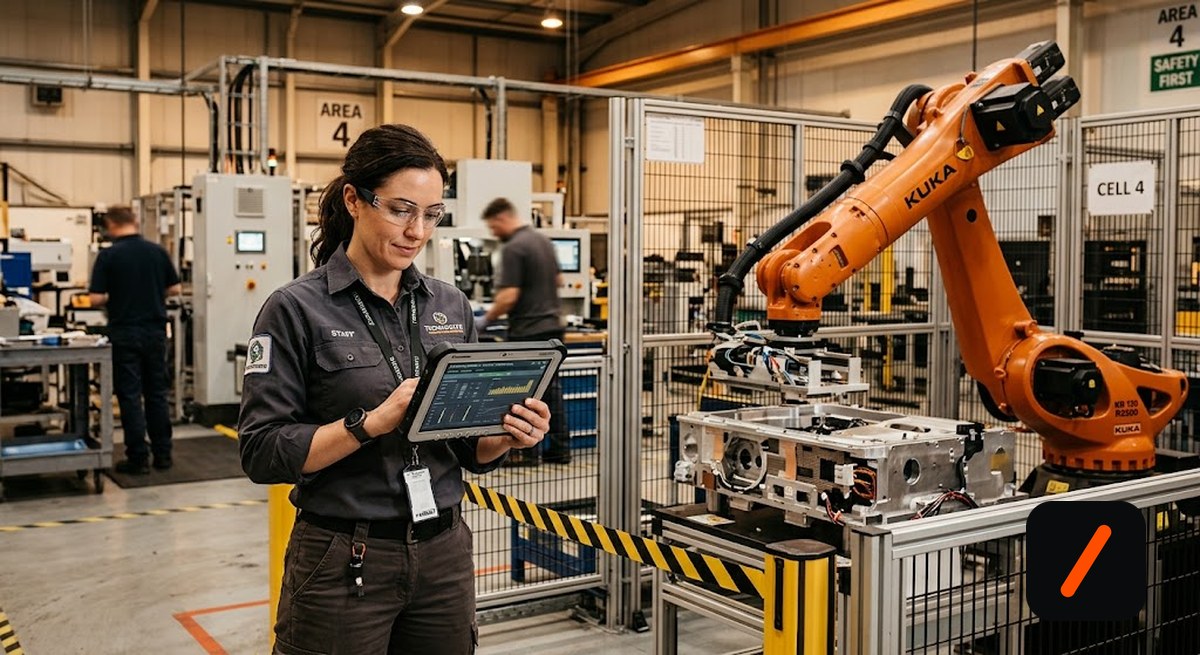
Prometheus, the artificial-intelligence venture co-founded by Jeff Bezos, has closed a $12 billion Series B led by JPMorgan Chase and BlackRock, vaulting the company to a $41 billion valuation. It is the single largest round and the highest valuation in the 2026 unicorn cohort, bringing Prometheus's total funding to $18.2 billion. Reports tie the company to AI aimed at engineering and manufacturing, the physical industries where AI has lagged software, and the sheer size of the check says as much about where capital is flowing as it does about the startup itself.
- Prometheus raised $12B in a Series B led by JPMorgan Chase and BlackRock, its total funding now $18.2B.
- The $41B valuation is the highest in 2026's unicorn class, backing a Bezos-co-founded push into applied, industrial AI.
- It lands in a record year: North American startup funding hit $392B in the first half of 2026, driven by AI megarounds.
- Capital is extraordinarily concentrated, with roughly 88% of 2026 AI startup funding going to US-headquartered companies.
What is Prometheus building?
Public detail is thin, which is itself notable for a company raising at $41 billion. Reports link Prometheus to AI for engineering and manufacturing, applying frontier models to the design, simulation, and production problems that dominate physical industries. That framing fits a broader July pattern where investors chased AI that touches the real world: robotics, agentic systems for regulated workflows, and hardware. The pitch, as far as it is public, is that the next wave of AI value is not another chatbot but models embedded in how things get engineered and built.
RelatedTogether AI Raises $800M as Aramco Backs Open AI
Why did JPMorgan and BlackRock lead?
Because a round this size needs balance-sheet institutions, not just venture funds. JPMorgan Chase and BlackRock leading a $12 billion Series B signals that the largest financial players want direct exposure to applied AI and are willing to underwrite it at scale. It also reflects the Bezos factor: a founder with a track record of building capital-intensive, infrastructure-heavy businesses is exactly who these institutions will back through a long, expensive build. For the market, the read is that industrial AI has graduated from thesis to allocation.
What does it say about the funding market?
The context is a record-shattering year. North American startups pulled in $392 billion in the first half of 2026, dwarfing prior periods, and nearly 40 companies reached unicorn status. But the capital is brutally concentrated: about 88% of AI startup funding went to US-headquartered companies, and the biggest checks clustered around a tiny set of names. Prometheus at $41 billion sits at the very top of that pyramid. For the average founder, the signal is double-edged, enormous money exists, but it is pooling around a few mega-rounds while everyone else fights for Series A oxygen with real revenue or usage to show.
Is this a bubble signal or a real shift?
A $12 billion round for a company with almost no public product will make anyone reach for the word bubble, and the concentration data does not exactly calm those nerves: a tiny cluster of names is absorbing a huge share of all AI capital while smaller startups fight over what is left. But the counterargument is that industrial AI, applying frontier models to engineering, simulation, and manufacturing, is genuinely underbuilt relative to its potential market, and those markets are enormous. If Prometheus is even partially right about automating parts of how physical things get designed and made, the addressable opportunity dwarfs another chat product. The risk is not that the sector is fake, it is that valuations are being set on founder pedigree and narrative rather than demonstrated demand, which is exactly how you get a painful correction if the products take longer than the funding assumes. The most useful read is that both things are true at once: the underlying shift toward applied, physical AI is real, and the way capital is pricing it, in enormous concentrated bets, carries real bubble risk. Prometheus is a bet that the shift outruns the froth, and the identity of its backers, the two institutions that move the most money in the world, is the tell that they believe the shift is the durable part. That belief could be wrong, but it is not casual, and it reprices what a first serious round for applied AI now looks like.
RelatedPixxel Raises $100M in India's Largest Spacetech Round
Our take
A $12 billion Series B for a company most people cannot yet describe is the purest expression of this moment: capital is betting on founders and sectors, not products it can inspect. If Prometheus genuinely cracks AI for engineering and manufacturing, the valuation will look early rather than excessive, because those markets are massive and underserved by software. The risk is the same one hanging over the whole cohort, that valuations are running ahead of demonstrated demand, and that a handful of names are absorbing capital that would fund a hundred smaller bets. Either way, this round redraws the ceiling for 2026.
- ReportNorth American startup funding shattered records in H1 2026 Crunchbase News
- FundingVC and startup funding roundup, July 2026 Tech Startups
- DataGenZTech Funding Tracker genztech.blog
Original analysis by GenZTech. Reporting via Crunchbase News.