
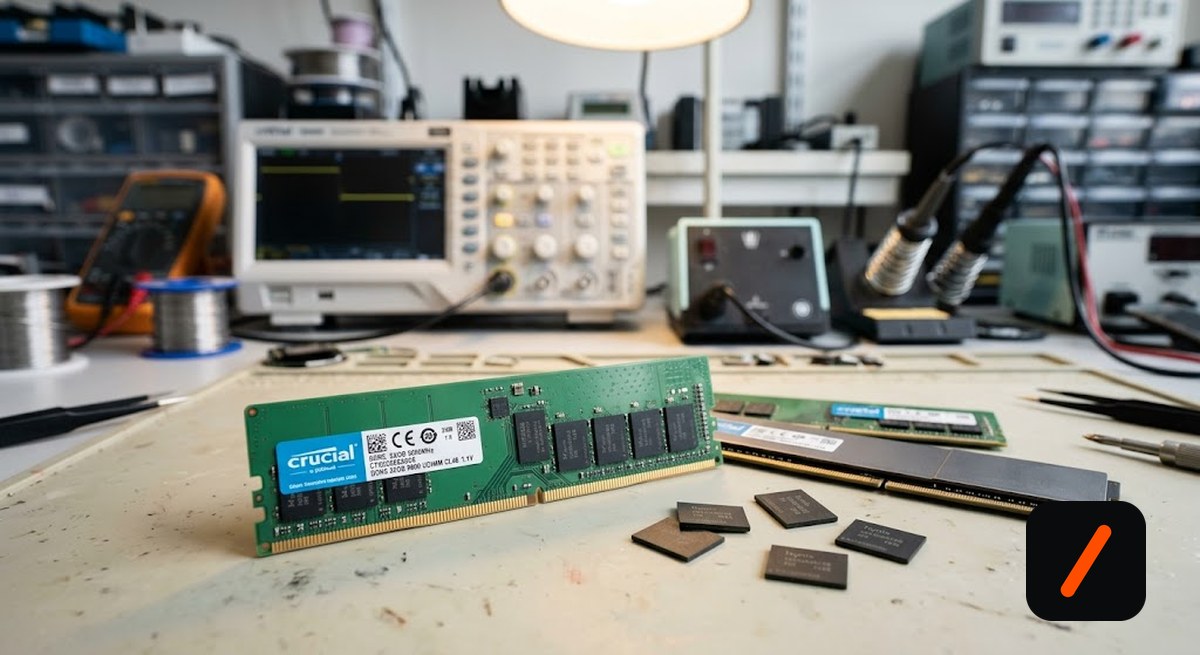
The memory industry is living through its worst supply crunch in 15 years, and the cause is not a factory fire or a demand fad: AI's hunger for high-bandwidth memory is eating the same wafers that make the DRAM in your laptop and phone. In Q2 2026, DRAM contract prices rose 58 to 63 percent quarter over quarter and NAND flash surged 70 to 75 percent, the steepest jumps in a decade, and that is why a PC costs more today than it did in spring.
- HBM and normal DRAM fight for the same silicon. They are made in the same fabs on the same wafers, and Micron pegs the swap at roughly 3 to 1: every wafer converted to HBM erases about three wafers' worth of DDR5 supply.
- The margins make the choice obvious. An HBM3E module sells for roughly $60 to $100 versus about $5 to $10 for a comparable amount of DDR5, so makers pour capacity into HBM and starve everything else.
- It is now the largest cost in a PC. Memory is about 35 percent of a PC's bill of materials, up from 15 to 18 percent, and Dell, HP, and Lenovo have raised prices 15 to 20 percent in response.
- Relief is years out. New fabs do not come online until 2027 to 2028, and SK Hynix's chairman warns supply stays roughly 20 percent below demand through 2030.
Why is AI making your laptop more expensive?
For decades, phones and PCs were the reason memory got made; that demand set the pace and everything else followed. In 2026 that logic inverted. Hyperscalers, Microsoft, Google, Meta, and Amazon, are buying high-bandwidth memory as fast as it can be produced to feed AI accelerators, and HBM shares fabs and wafers with ordinary DRAM. When a manufacturer can sell the output of a wafer as HBM for many times the price of DDR5, it does, and Micron's roughly 3-to-1 conversion ratio means each HBM ramp directly subtracts a much larger chunk of general-purpose supply. The result is two stories from one cause: an HBM boom for the fabs, and a shortage for everyone buying the memory that goes in consumer and enterprise gear.
RelatedThe Memory Supercycle Is Here, and AI Priced Everyone Out of RAM
How bad is it in real numbers?
The industry just had its best month ever and its most painful, at the same time. Global memory sales hit a record $74.6 billion in July 2026, up 31.7 percent month over month, and Samsung guided to roughly 89.4 trillion won (about $59 billion) in second-quarter operating profit, close to 19 times higher than a year earlier. That is what a supply-constrained market with insatiable demand looks like from the seller's side. From the buyer's side it is spec shrinkflation: phone makers quietly cutting mid-range memory from 12GB toward 8GB to protect margins, and PC vendors raising prices because memory is now the single biggest line in the bill of materials.
Why is new supply not fixing it?
Because cleanrooms take years, not quarters. Micron is spending $200 billion on US manufacturing, including up to six new fabs, but its first Idaho plant does not begin DRAM production until 2027, and some megafabs will not reach mass production until the second half of 2028. Meanwhile the demand side is locked in: Micron's HBM capacity is sold out through 2027, Kioxia committed its entire 2026 NAND output with some deals stretching into 2028, and long-term agreements now fix pricing and allocation years ahead. That structural difference from past cycles, where a shortage could reverse in a couple of quarters, is why analysts expect elevated prices to persist into late 2027 or 2028.
What does it mean for the market?
The signal for investors is a clean split between who mints money and who eats the cost. Memory makers, Samsung, SK Hynix (fresh off its record Nasdaq ADR listing), and Micron (MU), are printing profit because they hold the scarce resource and can allocate it to the highest bidder. The losers are downstream: PC vendors like Dell (DELL) and HP (HPQ) whose bill of materials just ballooned, and smartphone makers forced to shrink specs or raise prices into a cost-sensitive market. The swing factor to watch is the affordability ceiling. The Q2 blowout is cooling into a projected 13 to 18 percent Q3 DRAM rise not because supply improved, but because buyers simply cannot pay more, and that demand destruction is the first thing that would actually break the cycle.
RelatedSamsung's phone arm posts its first ever operating loss
- Consumer device specs. Watch for more 8GB mid-range phones and thinner base RAM on laptops; that is the shortage reaching your pocket.
- The 2027 fab wave. Micron's Idaho line and rival capacity coming online in 2027 is the first real supply relief, but demand is booked out to meet it.
- HBM allocation. If AI demand keeps winning wafers, consumer DRAM stays starved regardless of headline capacity growth.
Our take
Call it RAMageddon and the name is only half a joke. This is not a normal boom-bust memory cycle that mean-reverts once a couple of fabs catch up; it is a structural reallocation of the world's silicon toward whatever pays the most per wafer, and right now that is AI. The uncomfortable truth for consumers is that the thing making your next phone and laptop more expensive is the same thing making the memory makers richer than they have ever been, and neither the demand nor the fab timelines suggest a quick reprieve. The one genuine relief valve is boring: people refusing to pay. The Q3 cooldown is not supply riding to the rescue, it is buyers hitting a wall, and until 2027 capacity lands, that wall is the only thing standing between here and even higher prices.
- Analysis Tom's Hardware, TrendForce Q3 pricing quarterly contract price data and the cooldown
- Reference IEEE Spectrum, AI boom fuels DRAM shortage the HBM-versus-DRAM wafer conflict explained
- Market Record $74.6B monthly memory sales July 2026 industry revenue high
Original analysis by GenZTech. Pricing data via Tom's Hardware.