
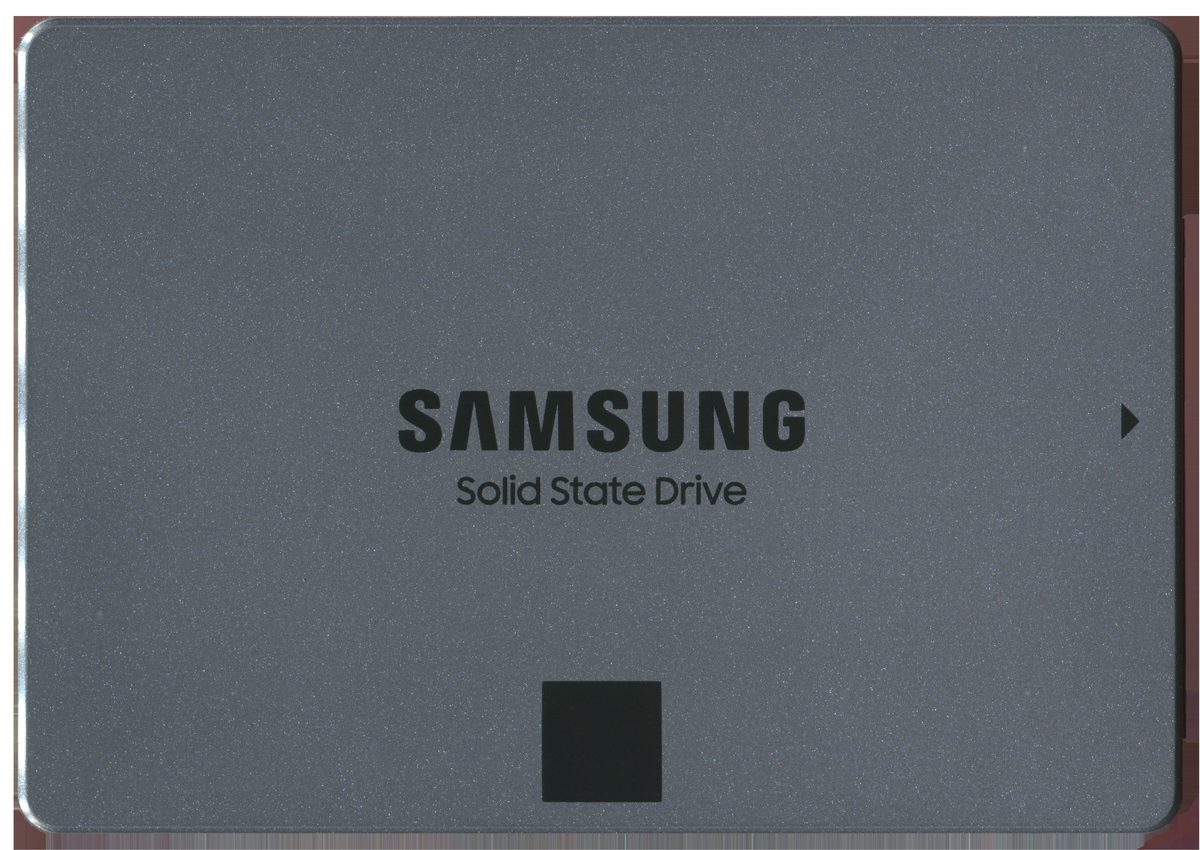
One of the biggest upgrades in everyday computing happened quietly: solid-state drives replaced spinning hard drives as the storage in most new machines. If you have ever moved from an old computer to a new one and marveled at how much faster it felt, the storage swap was probably the biggest reason. The win is so decisive it is worth understanding why.
Are solid-state drives faster than hard drives?
Yes, significantly. A solid-state drive (SSD) reads and writes data far faster than a mechanical hard drive (HDD) because it has no moving parts to wait on. Where a hard drive must physically spin a platter and move a read head, a delay of several milliseconds on every access, an SSD addresses its flash memory electronically and almost instantly. In everyday use, booting, launching apps and opening files, that makes an SSD feel several times faster.
RelatedApplied Materials lifts chip-gear outlook past 30%
Two completely different machines
A traditional hard drive is a mechanical device: spinning magnetic platters with a tiny arm that physically moves to the right spot to read or write data. A solid-state drive has no moving parts at all, it stores data in flash memory chips, electronically. That difference in fundamental nature, mechanical versus electronic, is the root of everything that follows. One has to physically move to find your data; the other simply addresses it.
Why SSDs feel so much faster
The speed gap comes mostly from that mechanical movement. A hard drive has to wait for the platter to spin to the right place and the arm to seek there before it can read, a delay measured in milliseconds that adds up across the thousands of small reads a computer does constantly. An SSD has no seek time; it accesses any piece of data almost instantly. This is why an SSD makes a computer feel transformed: booting, opening apps, and loading files all involve countless small reads, and removing the mechanical delay from each one makes the whole machine feel snappy.
More reliable, too
No moving parts also means more durability. A hard drive's spinning platters and moving arm are vulnerable to physical shock, drop a laptop while the drive is working and you can damage it. An SSD, being solid-state, shrugs off bumps that would wreck a hard drive, which matters enormously for portable devices. Fewer mechanical parts also means fewer things to wear out and fail in the usual mechanical ways.
Where hard drives still hold on
Hard drives are not extinct, and the reason is cost per capacity. For storing very large amounts of data cheaply, bulk archives, backups, big media libraries, hard drives still deliver far more space per dollar. So they have retreated to where their one advantage matters most: cheap mass storage where raw speed is not the priority. In the data center and in backup roles, the spinning disk still earns its keep.
RelatedTesla and SpaceX Commit $16.8B to Terafab Chip Plant in Texas
Why it matters
The shift from hard drives to SSDs is a clean example of how a change in the underlying physics of a component can transform the whole experience. By replacing mechanical movement with electronics, SSDs removed the single biggest source of everyday slowness in a computer. For anything where responsiveness matters, which is almost everything you do interactively, the solid-state drive simply won, and the spinning disk has quietly stepped aside to the corners where cheap bulk storage is all that counts.
The transition also quietly reshaped how software is designed. When storage was slow, programs went to great lengths to avoid touching the disk; with fast solid-state storage, many of those workarounds became unnecessary, and applications could be built assuming near-instant access. A hardware shift rippled all the way up into how software is written, a reminder that the layers of computing are more connected than they appear.
Analysis by GenZTech.