Internet News.
The web platform, browsers, protocols and the policy fights that shape the open internet. We decode the standards, platform changes and legal battles that determine what the web can do and who controls it.
 Internet
Chrome's Soft Navigations API Fixes SPA Web Vitals
Chrome is bringing a Soft Navigations API that finally lets single-page apps measure Core Web Vitals per in-app route change, closing a years-old blind spot where SPAs looked fast on the first load and untracked forever after.
 Internet
ECMAScript 2026 Is Finalized: What the 17th Edition Means
ECMAScript 2026, the 17th edition of the standard behind JavaScript, has been finalized. It ratifies the features that cleared the TC39 process this cycle and that browser engines largely shipped ahead of the spec, keeping the language on its steady once-a-year release rhythm.
 Internet
Edge 150 Now Lets You Sign In With a Google Account
Microsoft Edge 150 now lets you sign in with a Google account on Windows and macOS, while dropping AI history search and the master password and moving to a two-week release cadence from Edge 152.
 Internet
Chrome Finishes Killing Manifest V2 and Old Ad Blockers
Google is removing the last support for Manifest V2 extensions in Chrome this month, ending the era of full-strength content blockers like classic uBlock Origin and pushing users toward weaker MV3 alternatives.
 Internet
One fiber cut broke half the web: the CDN fragility problem
A single fiber cut in eastern North America took X, Reddit, Discord, and more offline for millions, a reminder that the modern web routes through a handful of providers whose local failures look global.
 Internet
Chrome Web Store's new rules gut data-hungry add-ons
Google’s updated Chrome Web Store policy, effective August 1, bars extensions from collecting more data than their stated purpose needs and adds an explicit ban on in-browser prediction-market betting.
 Internet
Cloudflare brings SQL queries to R2 object storage
Cloudflare now lets you run SQL directly against R2 Data Catalog tables from a built-in editor in its dashboard, turning object storage into a queryable data lake and undercutting the usual S3-plus-Athena setup on egress costs.
 Internet
EU Finds Instagram, Facebook Addictive Design Breaks DSA
The European Commission ruled Friday that Instagram and Facebook's addictive design, including infinite scroll and autoplay, breaches the EU Digital Services Act. If confirmed, Meta faces a fine of up to 6% of global turnover, more than $12 billion.
 Internet
Chrome's Device-Bound Sessions Go Live to Kill Cookie Theft
Chrome's Device Bound Session Credentials are now generally available, binding your login session to your device with hardware-backed keys so a stolen cookie is useless on an attacker's machine. It targets the account-takeover technique that shrugs off passwords and MFA.
 Internet
Chrome will warn on every HTTP site by default in 2026
Google Chrome is turning on 'Always Use Secure Connections' by default, so the browser warns before loading any plain-HTTP site. It is a quiet but sweeping change that pushes the last insecure corners of the web toward HTTPS, and may disrupt older sites that never migrated.
 Internet
WebMCP Wants to Turn Every Website Into an Agent Tool
WebMCP, a proposed open web standard shown at Google I/O 2026, lets sites expose structured tools like JavaScript functions and forms directly to browser AI agents, so agents act through defined endpoints instead of scraping the page.
 Internet
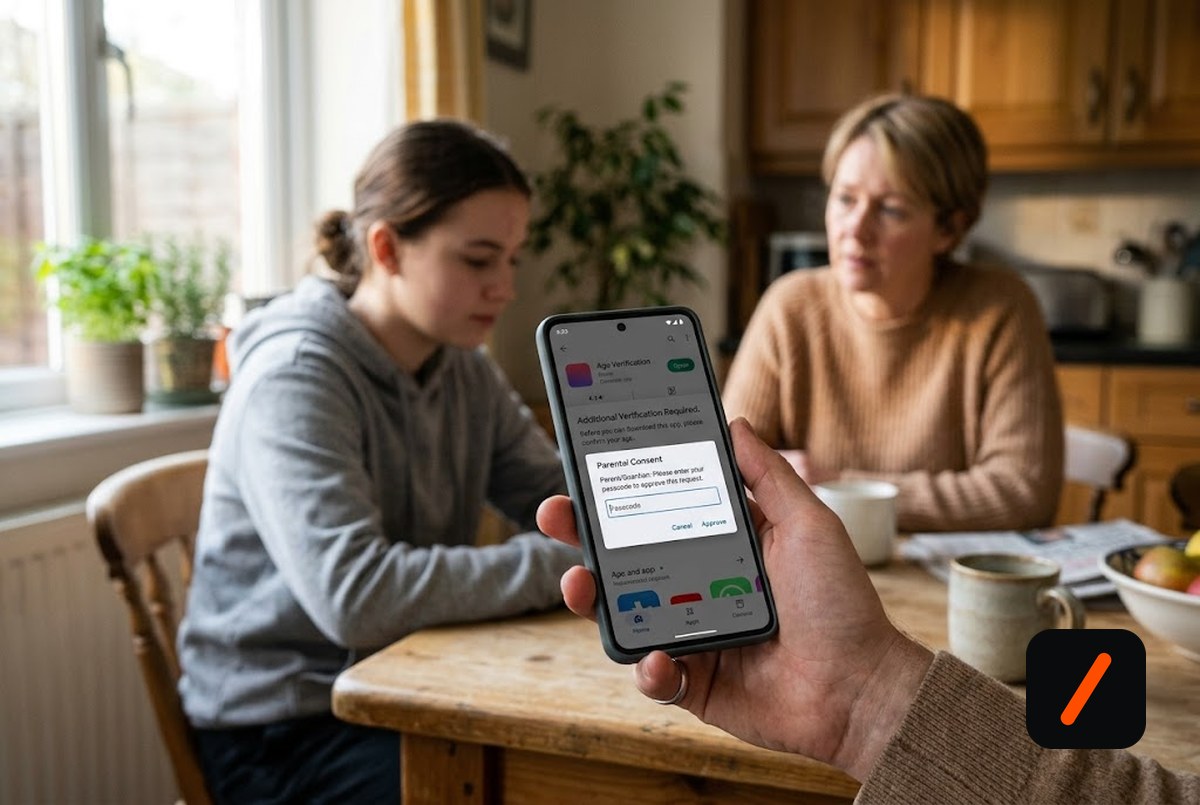
Congress Revives KOSA With App-Store Age Checks
A US House subcommittee is advancing 19 online-safety bills, including a revived Kids Online Safety Act and a sweeping plan to push age verification and parental consent down to the app store, which would reshape how everyone accesses the internet.
 Internet
Cloudflare says 52% of crawler traffic is AI training
Cloudflare's new bot report finds 52% of crawler requests now go to AI training as of June 2026, up from 22% a year earlier. The old web bargain, content for referral traffic, is breaking, and Cloudflare argues the internet needs new plumbing for permissions, licensing and payment.
 Internet
Exam Shutdowns Now Top Cause of Internet Outages
A Q2 2026 outage review found deliberate exam-season internet shutdowns overtook power failures as the leading cause of major disruptions, a shift from accidental to intentional outages.
 Internet
Antitrust Bill Returns to Ban Platform Self-Preferencing
A bipartisan group reintroduced the American Innovation and Choice Online Act, which would bar dominant platforms from self-preferencing their own products and blocking data portability.
 Internet
Iran’s Internet Flickers Back On After a 3-Month Blackout
Cloudflare Radar data shows Iran’s internet partially returning nearly three months after a nationwide shutdown, with traffic and DNS queries rising to only about 40% of pre-blackout levels, a case study in how national connectivity is switched off and measured.
 Internet
WebGPU Hits Every Browser and Runs AI in the Tab
WebGPU now ships in Chrome, Firefox, and Safari, reaching about 82% of users. Its compute shaders deliver roughly 15x gains over WebGL on heavy workloads and let large language models run entirely in a browser tab, no server round-trip.
 Internet
Chrome Moves to a Two-Week Stable Release Cadence
Google is halving Chrome's stable release interval to two weeks starting with Chrome 153 on September 8, 2026, a change designed to shrink the dangerous window between a browser bug becoming public and a fix reaching the billions of people running Chrome.
 Internet
Interop 2026 Brings View Transitions to Browsers
The Interop 2026 project has landed cross-browser baseline support for View Transitions, the Popover API, WebGPU, and CSS anchor positioning, closing long-standing gaps between Chrome, Safari, Firefox, and Edge.
 Internet
WebMCP Wants to Turn Every Website Into an Agent Tool
WebMCP is a proposed open web standard, unveiled at Google I/O 2026, that lets a website expose structured tools, JavaScript functions and HTML forms, directly to browser-based AI agents. Instead of an agent guessing its way through your UI by clicking pixels, the site hands it a documented set of actions to call.
 Internet
WebAssembly's JSPI Finally Closes the Async Gap
WebAssembly's new JSPI lets Wasm code written with blocking calls run against the browser's async world by suspending and resuming around a Promise, so huge C, C++ and Rust codebases can be ported to the web without a rewrite. It is a focus of Interop 2026 and ships in Safari 27.
 Internet
Chrome 150 Ships HTML-in-Canvas and Declarative Updates
Chrome 150, stable since June 30, ships new declarative rendering APIs including HTML-in-Canvas and Declarative Partial Updates, plus a Soft Navigations API that finally brings Core Web Vitals measurement to single-page apps.
 Internet
Firefox ships an AI kill switch to turn off every AI feature
Firefox 148 ships a global AI kill switch that disables every current and future AI feature in one click, plus individual toggles for translations, PDF alt text, AI tab grouping, link previews and the sidebar chatbot. It is Mozilla's answer to a user backlash over the browser's AI push, and the clearest anti-agentic stance in the browser wars.
 Internet
AI Browsers Are Coming for Chrome's 90% Grip
Perplexity's Comet went free on every platform in March 2026 while OpenAI's Atlas stays Mac-only, and analysts project AI-native browsers could take 15-20% of the browser market by end of 2026, mostly from Chrome. The real fight is agentic browsing versus incumbents bolting on AI.
 Internet
Manifest V3 Enforcement Reshapes Chrome Ad Blocking
The full 2026 enforcement of Manifest V3 across every Chromium browser has completed the shift away from the old blocking webRequest model, forcing ad blockers onto declarative rules that hand more control over what gets blocked to the browser engine and, through it, to Google.
 Internet
WebGPU Goes Cross-Browser, Unlocking In-Browser AI
WebGPU, the browser API that gives web apps direct GPU access, now works across Chrome, Firefox, Safari and Edge and reaches about 82% of browsers in 2026. It replaces WebGL, adds real compute shaders, and makes in-browser AI inference and console-quality games practical.
 Internet
Interop 2026 Makes Anchor Positioning Work Everywhere
Interop 2026, the joint effort by Apple, Google, Microsoft, Mozilla, Igalia and Bocoup, has shipped baseline cross-browser support for CSS anchor positioning, View Transitions, the Popover API and WebGPU, retiring a stack of JavaScript workarounds.
 Internet
Cloudflare and Browsers Build a Bot-vs-Human Token
Cloudflare, Chrome, Firefox and Edge are jointly building PACT, a privacy-preserving token that lets a browser prove a session is legitimate without revealing identity, a response to bots now making up 58% of web traffic.
 Internet
Ladybird Is Building the First New Browser Engine in Years
Ladybird, a nonprofit browser built on a from-scratch engine that borrows no code from Chromium, WebKit, or Gecko, is targeting a 2026 developer alpha, a rare attempt to break the web's engine monoculture.
 Internet
WebMCP Lets Websites Talk Directly to AI Agents
WebMCP is a proposed W3C standard from Google and Microsoft that lets a website declare structured tools an AI agent can call directly, instead of the agent screenshotting the page and guessing where to click.