
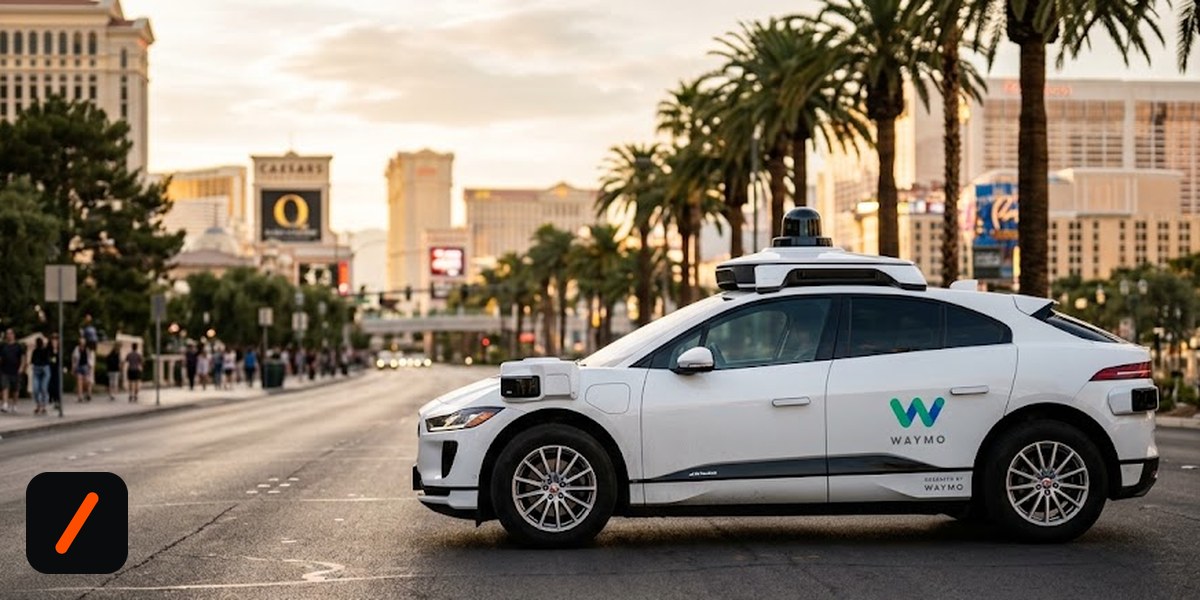
Nevada's transportation regulator voted unanimously on Thursday, August 20, to let Tesla, Waymo and Uber charge passengers for driverless rides across Clark County. Combined, the three permits clear up to 7,000 robotaxis to run commercially around Las Vegas over the next year, the largest single expansion of paid autonomous ride-hailing any US market has approved at once.
- Tesla's permit covers up to 5,000 vehicles over 12 months for its Cybercab service, and it can expand statewide by simply notifying the agency.
- Waymo can run up to 1,000 vehicles under a new permit that finally lets it charge fares in Las Vegas.
- Uber can run up to 1,000 vehicles too, but through Amazon's Zoox and Hyundai's Motional rather than its own hardware.
- Six weeks earlier, Nevada had approved Tesla for exactly 10 vehicles. That jump is the part most coverage buries.
What did Nevada actually approve on Thursday?
The Nevada Transportation Authority approved three applications in one meeting: Tesla for up to 5,000 vehicles, Waymo for up to 1,000, and Uber for up to 1,000 run through its partners Zoox and Motional. That's 7,000 paid robotaxis permitted. Some coverage cites an "up to 8,000" county-wide figure once separately-permitted fleets, like Zoox's own existing network authorization, get folded in, but that larger number describes the whole patchwork, not Thursday's vote. 7,000 is the number tied to this decision.
RelatedZoox clears NHTSA for paid robotaxi rides, capped at 2,500
Tesla's permit is the broadest: statewide operation, with a simple notify-the-agency step to expand rather than a fresh application each time, a head start if it wants Reno next. Its Cybercab chief engineer has been candid about how far off full deployment is: "The 5,000 has always been a ceiling for us... I think we would be extremely happy and satisfied if we could get ourselves up to 2,500."
Why couldn't Waymo already charge for rides here?
Waymo has been running fully driverless vehicles on Las Vegas streets since July 2026, nobody behind the wheel, full state sign-off. What it lacked was permission to charge for the ride. Nevada treats "no one in the driver's seat" and "you can bill a fare" as two separate questions, and Thursday's vote answered the second. The new Autonomous Vehicle Network Company permit is a commercial-fare authorization, layered on top of driving rights Waymo already held.
That split explains why a company can be visibly driving a city for weeks before a dollar changes hands. Driverless authorization proves the tech works well enough to trust on public roads. A commercial permit is a separate call about liability and insurance, and Tesla and Uber's approvals bundle both into one decision, since neither had cleared the driverless bar the way Waymo had.
Who actually gets affected by this?
Riders in specific corridors first. Early service areas named alongside the permits include the Golden Triangle (airport to the Strip), downtown, and the Town Square shopping district, the parts of Clark County with tourist and convention traffic dense enough to make a network pencil out immediately.
Uber's approach is worth sitting with. It isn't running its own robotaxi technology here, it's plugging into Zoox and Motional, a different bet than the one it made when it split from Waymo's own app. Uber's pace in Nevada depends on how fast two other companies build cars, not on Uber itself.
Taxi and livery operators are the clearest losers here. They formally opposed all three permits over oversaturation and congestion, and Nevada approved them anyway. Tesla says it's coordinating with local law enforcement on crash and traffic-stop protocols, a detail that matters more in a convention-and-casino city than almost anywhere else.
From 10 vehicles to a 5,000-vehicle ceiling
In July, Tesla applied to Nevada for a permit covering 5,000 vehicles and got approved for 10, according to Electrek's reporting at the time. Ten. That temporary permit is the clearest data point for how fast this actually moved: six weeks later the same regulator signed off on the full 5,000-vehicle ceiling, alongside Waymo and Uber in the same sitting.
RelatedHeart Aerospace X1 Flies as Largest Electric Aircraft
- Jul 2026Tesla applies for a 5,000-vehicle permit approved for only 10, temporarily, per Electrek
- Jul 2026Waymo authorized for fully driverless operation no permission yet to charge fares
- Aug 20, 2026NTA unanimously approves all three permits Tesla 5,000, Waymo 1,000, Uber 1,000
- Next 12 monthsOperators scale toward their ceilings engineer expects roughly half of Tesla's 5,000
What it means for the market
Tesla (TSLA) and Uber (UBER) both trade on news like this, and reporting around Thursday's vote noted Tesla shares moved higher on the approval. Waymo has no ticker of its own to move. It's a subsidiary of Alphabet (GOOGL), so whatever value this creates sits inside a much larger company's numbers rather than as a standalone stock story.
The signal for investors is less about the number 5,000 than the gap between a permit ceiling and an actual deployed fleet. A permit is a legal maximum, not a forecast, and Tesla's own engineer said the company would be happy reaching roughly half that in the next year. Reading "5,000 robotaxis approved" as "5,000 robotaxis coming" misreads what a filing promises. Worth tracking instead: real vehicles on the street, how fast Zoox and Motional scale under Uber's permit, and whether Tesla's notify-and-expand privilege turns into service in a second city.
| Tesla | Waymo | Uber | |
|---|---|---|---|
| Vehicle ceiling | Up to 5,000 | Up to 1,000 | Up to 1,000 |
| Fleet used | Cybercab | Own driverless fleet | Zoox and Motional vehicles |
| Partner stack | None, direct | None, direct | Zoox (Amazon), Motional (Hyundai) |
| Prior NV status | Temp 10-vehicle permit, Jul | Driverless since Jul, no fares | No prior NV permit |
- Real fleet size. Track vehicles actually on the road against the 5,000/1,000/1,000 ceilings, not the ceilings themselves.
- Zoox and Motional's build-out. Uber doesn't control its own hardware here, so their delivery pace matters more than Uber's own plans.
- Tesla's statewide expansion. A second Nevada city under the notify-and-expand privilege would be a meaningful signal.
- Taxi and livery response. The opposition lost this round. Watch for legislative or legal escalation next.
Our take
The most telling number here isn't 5,000, it's 10. Nevada went from a permit for ten cars to a 5,000-vehicle ceiling in under two months, not because Tesla's technology changed dramatically, but because Waymo and Uber walked in with their own applications at the same time. Regulators evidently decided it made more sense to open the market to three operators at once than let one company's rollout set the pace for everyone.
Waymo's position is worth watching longest. It already proved the driverless part in July, so Thursday just gave it permission to bill for something it was already doing safely, a lower bar than Tesla and Uber still have to clear. If oversaturation turns out to be a real problem and not just a taxi-lobby talking point, Waymo's head start on trust, not its vehicle count, is what protects it.
- ReportingTesla, Uber and Waymo all get the OK to operate thousands of robotaxis in Nevada : TechCrunch, the Aug 20 vote and permit details
- ReportingNevada allows Uber, Tesla and Waymo to start paid robotaxi service : Engadget
- ContextTesla's Nevada robotaxi permit covers just 10 vehicles : Electrek, the July before-and-after
- RelatedOur coverage of Zoox's NHTSA Part 555 exemption : GenZ Tech
- RelatedOur coverage of Waymo splitting from Uber's app : GenZ Tech
Original analysis by GenZTech, with reporting from TechCrunch.