
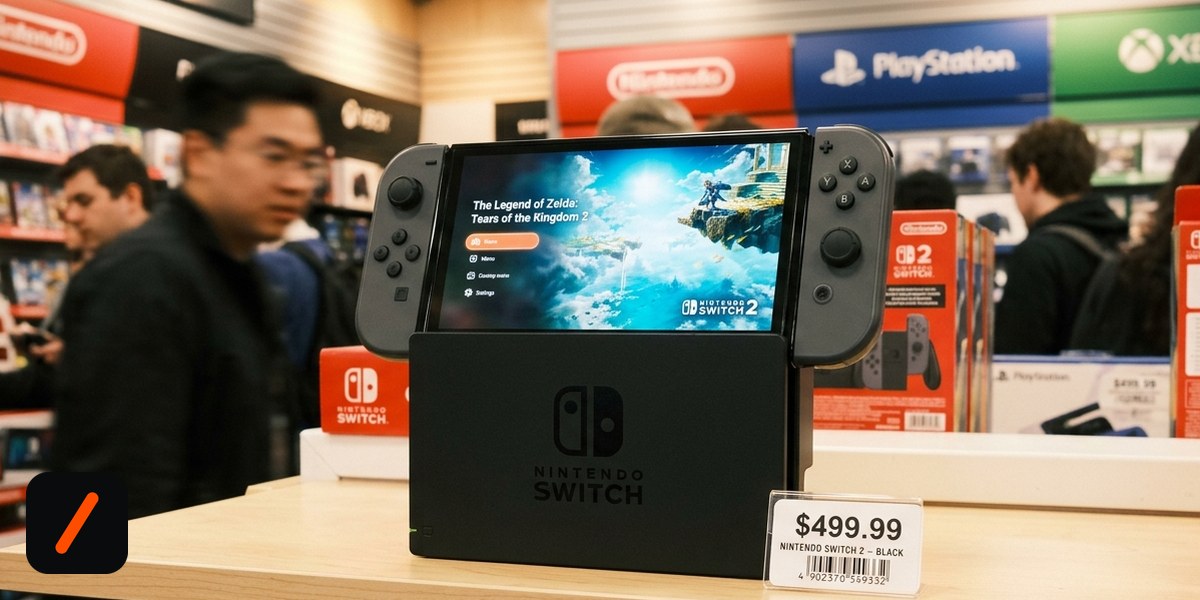
Nintendo raised the Nintendo Switch 2's US price from $449.99 to $499.99 on September 1, 2026. That's a $50 jump, 11% overnight, and Nintendo's own explanation points at "various changes in market conditions" it expects to last through the medium to long term. Translated out of corporate hedging, that means memory chips: the DRAM and NAND that go into every Switch 2 have gotten dramatically more expensive, largely because AI data center operators are buying up the same supply.
- Nintendo of America's official MSRP revision took effect September 1, 2026, moving the base Switch 2 console from $449.99 to $499.99.
- The hike mirrors what already happened in Japan on May 25, 2026, when a ¥10,000 domestic price increase was followed by an 87% collapse in weekly hardware sales, from 247,880 units to 31,751.
- The root cause isn't tariffs or soft demand for the console itself. AI data centers are outbidding consumer electronics makers for limited DRAM supply, and prices for that memory have nearly doubled in recent months.
- Nintendo president Shuntaro Furukawa has already told investors that memory chip costs are pressuring profitability, and Canada and Europe are seeing comparable increases alongside the US.
What actually changed on September 1?
The number itself is simple. US buyers now pay $499.99 for the base Nintendo Switch 2 hardware, up from the $449.99 it launched at. Nintendo posted the change as a formal notice, "Price Revision for Nintendo Switch 2 System," on nintendo.com, which is a fairly rare move for the company. Nintendo hardware has historically held its launch price for years; a mid-cycle increase this explicit, on a console still less than a year and a half old, is not something the company does lightly.
RelatedPixel 11 Starts at $899 as Google Raises Every Price
Why raise the price now, and why blame "market conditions"?
Nintendo's language is deliberately vague, but it's not meaningless. The company says it expects these cost pressures to persist over the medium to long term, not to resolve in a quarter or two. That framing matters, because it tells retailers, investors, and buyers this isn't a one-time correction tied to a single component shortage. Furukawa has separately flagged memory chip costs as a drag on hardware margins in investor communications, which lines up with what's happening industry-wide: component costs that used to be a rounding error in a console's bill of materials are now a line item big enough to move the retail price.
What's the mechanism most coverage is skipping?
The part that gets flattened into "chip shortage" headlines is that this isn't a supply problem in the traditional sense. Fabs aren't offline, and there's no earthquake or factory fire behind this one. It's demand. AI data center buildouts need enormous quantities of DRAM and high-bandwidth memory, and those buyers can absorb price increases that would be crushing for a $500 game console. When a hyperscaler and a console maker are bidding for the same wafer capacity, the hyperscaler wins, because the chips are going into servers that generate revenue per rack, not a static retail price a company committed to a year earlier. DRAM prices climbing toward double in a matter of months is the visible result of that mismatch.
Who actually feels this?
Buyers first, obviously. Anyone who waited past September 1 to pick up a Switch 2 now pays $50 more for the identical hardware, and bundles, accessories, and storage expansions built around the same memory chips are exposed to the same cost pressure. But Nintendo isn't unique here. Every console and gadget maker sourcing DRAM and NAND is bidding in the same shrinking pool that AI infrastructure spending is pulling from. Sony and Microsoft aren't immune to the input costs; PC builders and laptop makers aren't either. Nintendo is just the company that has been public and specific about it, first in Japan in May, then in the US in September.
What does Japan's 87% sales crash actually tell us about US demand?
It's the most concrete data point in this whole story, and it's genuinely unsettling for Nintendo. An 87% drop in a single week isn't a soft dip, it's buyers effectively refusing to purchase at the new number, at least in the short term. Whether that's a temporary shock, some Japanese buyers front-loading demand before the hike and none left to buy after, or a real signal that ¥10,000 crossed a psychological line, is genuinely unclear from one week of data. The US price took effect only a day before this piece was published, so there's no equivalent domestic sales number yet. What Japan does establish is that this kind of price move can produce a real, visible drop in unit sales, not just a bit of grumbling on social media.
RelatedApple Watch Series 12: Price, Specs, Health Features
What happens next?
Watch three things. First, whether US weekly sales data, once it starts showing up in tracking services, shows anything close to Japan's collapse or a much softer landing given the different price sensitivity of American buyers. Second, whether DRAM and NAND prices actually ease over the next couple of quarters or whether Nintendo's "medium to long term" framing turns out to be accurate and this is the new baseline. Third, whether other console and PC hardware makers follow with their own increases before the holiday shopping season, since none of them are shielded from the same input costs Nintendo just passed on.
- US weekly Switch 2 sales data over the next month, to see if American demand dips anywhere near Japan's 87% crash or absorbs the increase more quietly.
- Whether DRAM spot prices start cooling as AI infrastructure buildouts hit capacity limits, or keep climbing into 2027.
- Whether Sony, Microsoft, or major PC and laptop makers announce their own memory-driven price adjustments before the holidays.
- May 25, 2026Japan's domestic Switch 2 price rises by ¥10,000 First market to see the increase
- Late May 2026Japan's weekly hardware sales fall 87% 247,880 units to 31,751 in one week
- Summer 2026Canada and Europe follow with comparable increases Confirms a global rollout, not a one-off
- September 1, 2026US MSRP rises from $449.99 to $499.99 Current
Our take
Nintendo's phrasing, "market conditions... over the medium to long term," is doing a lot of work to avoid saying "AI data centers are eating our chip supply" in plain English, and that's a communications choice worth noticing on its own. The more interesting story here isn't really about Nintendo. It's that a console maker with enormous purchasing power and years of lead time still couldn't hedge its way out of a component market being reshaped by an entirely different industry. If Nintendo is exposed to this, smaller gadget makers with thinner margins and less supply-chain leverage are exposed to it more. Expect this pattern, AI infrastructure demand quietly pushing up the price of unrelated consumer electronics, to keep showing up in 2026 and into 2027, well past the point where most coverage stops calling it an "AI story" at all.
- OfficialNintendo: Price Revision for Nintendo Switch 2 System
- ReportingThe FPS Review: Nintendo Switch 2 is getting a $50 price hike to $499.99
- ReportingTech Times: Switch 2 hits $499.99 today, Japan's 87% sales crash warns what comes next
- ReportingTech Times: Nintendo Switch 2 price hike to $499.99, AI memory crisis sets September deadline
Original analysis by GenZTech, based on Nintendo's official price revision notice and reporting from The FPS Review and Tech Times.