
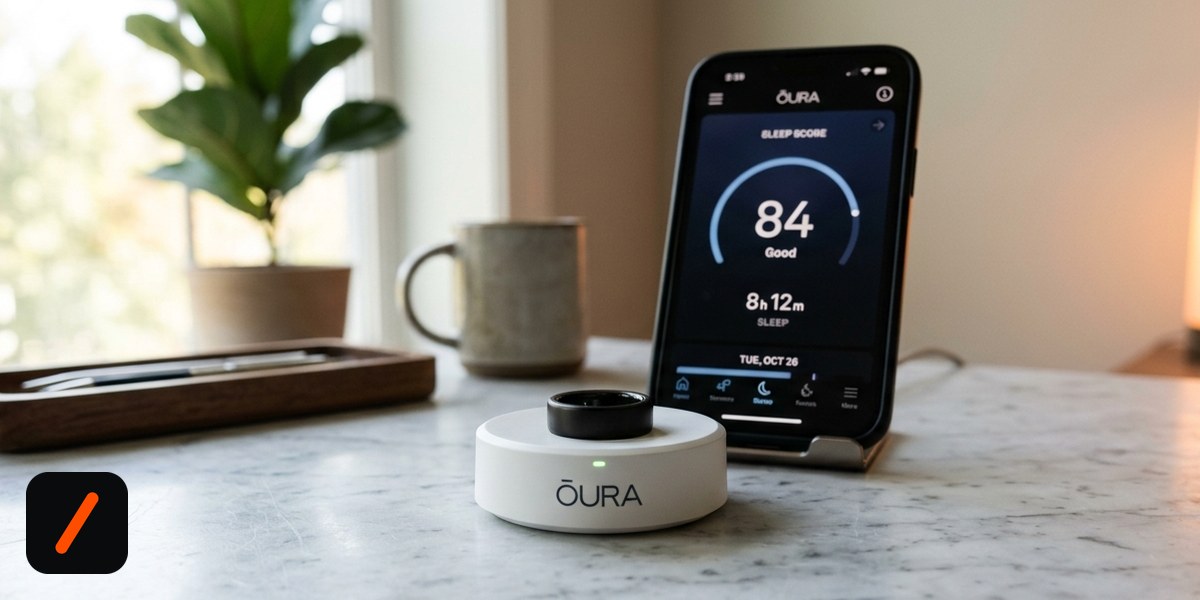
Oura set terms for its IPO on September 21, and the headline number is misleading. The smart ring maker and its backers are seeking up to $2.2 billion, but 73% of the 50 million shares on offer are being sold by existing investors, not the company. Oura itself is selling 13.5 million shares; existing shareholders are selling 36.5 million. And almost every dollar Oura collects from its own slice is earmarked for a tax bill, not growth.
Shares are marketed at $40 to $44 each, aiming for a Nasdaq listing under the ticker OURA. Goldman Sachs, Morgan Stanley and J.P. Morgan are running the deal. At the top of the range, TechCrunch pegs Oura's market cap at roughly $14.1 billion. Reuters, using a fully diluted share count, puts it at $15.62 billion. Either way, it's a steep climb from where the company sat less than two years ago.
RelatedUnitree's $9B IPO Makes Humanoid Robots a Public Stock
Why does almost none of Oura's own money go toward growth?
At the $42 midpoint, selling shareholders take home roughly $1.53 billion. Oura's own take is about $567 million gross, $532.6 million net of fees. Of that, $526.4 million, more than 98% of the net proceeds, is earmarked for accumulated tax obligations tied to employee stock. That leaves about $6.2 million for general corporate purposes. Oura had $372 million in cash at the end of June 2026, so this isn't a company about to run dry. It's a company settling a very specific bill.
The mechanism is common at pre-IPO tech companies but rarely explained. Employees hold restricted stock units, RSUs, that vest on a schedule but carry a second condition: no taxable income until a liquidity event, like an IPO, happens too. That's double-trigger vesting, meant to keep private-company staff from owing tax on stock they can't yet sell. The moment Oura prices, years of accumulated RSUs hit their second trigger at once. Oura must withhold shares or cash to cover the tax bill and remit real money to authorities on employees' behalf. A $526.4 million bill implies a lot of vested equity piled up while Oura stayed private, first through a $5.2 billion round in December 2024, then $11 billion last October. This IPO is, in large part, that bill coming due.
What does Forerunner's full exit signal?
Forerunner Ventures led Oura's Series B back in 2020. In this offering it isn't trimming its position, it's selling all of it: the entire 9.3% stake, 28.7 million shares, for roughly $1.20 billion. Lifeline Ventures is also among the sellers. A partial secondary sale by an early investor is routine and doesn't say much on its own. A full exit at the IPO is a stronger tell: it suggests Forerunner sees this valuation as a good place to cash out rather than a floor to build on, or that the fund's timeline simply calls for realizing the gain now. When the earliest institutional backer leaves nothing on the table, that's worth weighing against the growth story in the prospectus.
Does the business justify an 11 to 13 times sales multiple?
Oura's revenue in its most recent reported period was about $1.21 billion: $974 million from hardware, 80% of sales, and $240.5 million from membership subscriptions, 20% of sales but at an 89% gross margin. That split is why Oura can command a valuation multiple that looks more like a software company's than a device maker's. Garmin, a public hardware comparable, doesn't carry a recurring membership layer with that kind of margin. Whoop leans almost entirely on subscription revenue with no device markup. Oura sits in between: majority hardware revenue, with a high-margin membership business layered on top to justify the multiple. At $14.1 billion to $15.62 billion against roughly $1.21 billion in revenue, that's somewhere around 11 to 13 times sales. Oura expects 5.7 million paying members by the end of fiscal 2026. Whether that base keeps compounding, or plateaus once ring sales slow, is the real question behind the multiple.
| Oura | Whoop | Garmin | Samsung Galaxy Ring | |
|---|---|---|---|---|
| Form factor | Ring | Band, no screen | Watch | Ring |
| Subscription required | Yes, membership | Yes, membership | No | No |
| Public company | Pending, ticker OURA | No | Yes, GRMN | No, part of Samsung Electronics |
| Revenue model | Hardware plus membership | Membership-first | Hardware, one-time | Hardware, ecosystem lock-in |
What does it mean for the valuation?
Eli Lilly indicated interest in up to $100 million of shares, and Dragoneer indicated up to $300 million. Dragoneer is a familiar name in growth-stage crossover rounds, the kind of investor that bridges private companies into public markets. Eli Lilly's interest is the more interesting signal: Lilly makes Zepbound and other GLP-1 drugs, and GLP-1 patients are exactly the population that benefits from continuous sleep, activity and readiness tracking, the kind of data an Oura Ring collects. An anchor order from a drugmaker hints at where Oura's data could eventually plug into patient monitoring, though nothing in the filing confirms a formal partnership.
RelatedGimlet Labs Raises $300M at $3B to Bet Against Nvidia Lock-In
For anyone tracking this deal rather than trading it, the signal isn't the $2.2 billion headline. It's where the stock settles against the $40 to $44 range once it trades, and what happens roughly 180 days later when the lock-up expires. This is factual analysis of a public filing, not investment advice.
- 2013Oura founded in Oulu, Finland
- 2020Forerunner Ventures leads Series B
- Dec 2024Private round values Oura at $5.2 billion
- Oct 2025Private round values Oura at $11 billion
- 2026-09-21IPO terms set up to $2.2 billion, $40 to $44 range
- Pricing / first tradeNasdaq debut under ticker OURA
- +180 daysStandard lock-up expires remaining insider shares become sellable
Our take
The membership layer is real and the margin math checks out. But the structure of this IPO is a tell in its own right. A well-capitalized company doesn't normally route 98% of its own net proceeds to an employee tax bill while insiders sell 73% of the offering and its earliest institutional backer exits completely. Oura let equity compensation pile up for years while marking itself up privately from $5.2 billion to $11 billion to $14.1 billion, and this listing looks less like a growth raise than the moment everyone holding paper gains finally cashes a check. That doesn't make Oura a bad business. It makes this specific IPO a liquidity event dressed up as one. Investors can track how it compares to other recent raises on GenZTech's Funding Tracker.
- Final pricing. Above $44 signals demand outpacing the insider-heavy structure; below $40 tells a different story.
- First-day trade. Whether OURA holds an 11 to 13 times sales multiple once public money sets the price.
- Lock-up expiry. Roughly 180 days out, when remaining insider shares can first hit the market.
- Eli Lilly's stake. Whether the GLP-1 tie-in becomes a product integration or stays a passive order.
- FilingOura S-1 registration, SEC EDGAR Offering terms and financials
- PressBloomberg: Oura backers seek $2.2 billion in US IPO Sept 21, 2026
- PressReuters via Investing.com: Oura shareholders seek up to $2.2 billion Underwriter, lock-up detail
- DataGenZTech Funding Tracker Track raises like this one
- DataBiggest AI Funding Rounds Compare against top AI raises
Original analysis by GenZTech. Source: TechCrunch