
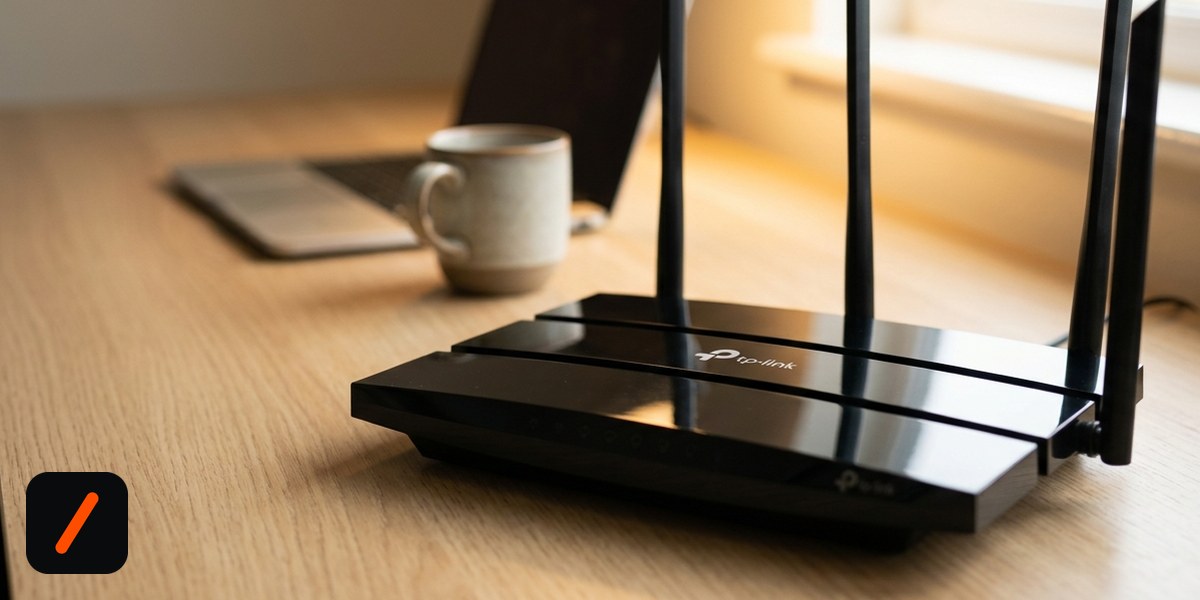
TP-Link said today that the Archer 8 Ultra BN19000, its first consumer Wi-Fi 8 router, opens for preorder on September 30. That makes it the first Wi-Fi 8 product with an actual ship date, months after the underlying 802.11bn standard was still being finalized. There's a catch: TP-Link still doesn't have FCC approval to sell new networking gear in the US, so "preorders open in select regions" quietly excludes the router's biggest potential market for now.
- The Archer 8 Ultra BN19000 packs 18 internal antennas, up to 19 Gbps of aggregate wireless throughput, and 10 Gbps of wired connectivity, launching September 30.
- A mesh sibling, the Deco 8 Ultra BN22000, pushes 22 Gbps aggregate and covers up to 9,800 square feet in a 3-pack, but doesn't arrive until Q1 2027.
- TP-Link is pitching Wi-Fi 8 as a reliability upgrade over Wi-Fi 7, not a raw speed jump, via a feature set it calls StabilityEngine.
- TP-Link has not received FCC clearance for new US hardware, unlike Amazon and Netgear, which already have conditional approval, so American buyers may have to wait.
What did TP-Link actually announce?
TP-Link confirmed the Archer 8 Ultra BN19000, a tri-band router, will be available for preorder starting September 30 in select regions. The company is still keeping most of the spec sheet close: it hasn't said which chipset partner (it's working with Broadcom, MediaTek, and Qualcomm across the Wi-Fi 8 line) powers this specific model, and pricing hasn't been announced. What's confirmed is 18 internal antennas, 19 Gbps of aggregate wireless bandwidth, and 10 Gbps of wired throughput, though TP-Link hasn't clarified whether that wired spec covers both WAN and LAN ports or just one.
RelatedIntel puts its next CPU core on desktop before the data center
The name mirrors what TP-Link teased back in May: a standalone router first, a mesh system second. That plan is now on the calendar.
Why is TP-Link selling Wi-Fi 8 on reliability instead of speed?
Wi-Fi 8, formally IEEE 802.11bn, isn't chasing the kind of headline speed jump that defined Wi-Fi 6 to Wi-Fi 7. TP-Link's own framing leans on what it's calling StabilityEngine, a bundle of techniques including Enhanced Long Range (ELR) and Distributed Resource Units (DRU) aimed at low-power devices sitting at the edge of a home network, plus Unequal Modulation (UEQM) and Modulation and Coding Schemes (MCS) meant to keep traffic moving when a lot of devices are fighting for airtime at once.
That's a real problem worth solving. Anyone running a smart-home setup with a dozen IoT devices, a couple of streaming boxes, and a work laptop on video calls already knows the failure mode: not a lack of top-end speed, but random latency spikes and mesh nodes that quietly drop a device to a weaker band. TP-Link is explicitly targeting that experience rather than a bigger number on the box.
What about the mesh version?
The Deco 8 Ultra BN22000 is the mesh counterpart, rated for 22 Gbps aggregate and the same 10 Gbps wired connectivity. TP-Link typically ships Deco systems in 2- or 3-packs, and the 3-pack configuration is rated to cover up to 9,800 square feet, useful context for anyone in a larger home currently patching together range extenders. It won't ship until Q1 2027, roughly a full quarter behind the standalone router.
| Spec | Archer 8 Ultra BN19000 | Deco 8 Ultra BN22000 (3-pack) |
|---|---|---|
| Form factor | Standalone router | Mesh system |
| Aggregate wireless speed | Up to 19 Gbps | Up to 22 Gbps |
| Wired connectivity | 10 Gbps | 10 Gbps |
| Coverage claim | Not specified | Up to 9,800 sq ft |
| Availability | Preorder Sept 30, 2026 | Q1 2027 |
Why might US buyers not get one at launch?
This is the part most spec-sheet coverage of the announcement is skipping. TP-Link is a Chinese-founded networking vendor that has spent the past two years under increasing scrutiny from US regulators over national-security concerns tied to router firmware and data flows. Competitors Amazon and Netgear have already secured conditional approval from the FCC's Covered List process to keep releasing new networking products. TP-Link has not, and as of today's announcement it still hasn't obtained the clearance it needs to launch new hardware in the US.
RelatedSamsung Ships First 12-Layer HBM4E Memory Samples
That's why TP-Link's own language is carefully hedged: preorders open in "select regions" on September 30, with no confirmation the US is one of them. For a company whose router business leans heavily on the US consumer market, an approval delay isn't a footnote, it's the single biggest variable in whether the Archer 8 Ultra's launch date means anything to most American shoppers.
What's next for TP-Link's Wi-Fi 8 lineup?
- May 2026TP-Link teases Wi-Fi 8 plans Reveals Archer 8 and Deco 8 branding and a new industrial design language
- Sept 30, 2026Archer 8 Ultra BN19000 preorders open Select regions only; US status unconfirmed
- Q1 2027Deco 8 Ultra BN22000 mesh system arrives 2- and 3-pack configurations expected
- Q2 2027Roam 8 travel router, extenders, PCIe/USB adapters Rounds out the Wi-Fi 8 portfolio
What it means for the networking market
TP-Link doesn't trade publicly, but the router category does through Netgear (NASDAQ: NTGR), the clearest US-listed pure play in consumer and prosumer Wi-Fi hardware. Netgear's FCC clearance is a real structural advantage right now: if TP-Link's Wi-Fi 8 lineup stays locked out of the US at launch, Netgear and Ubiquiti get a longer runway to establish their own Wi-Fi 8 products with early adopters before TP-Link's typically aggressive pricing shows up to compete. The signal worth watching isn't the spec sheet, it's whether TP-Link's regulatory status changes before September 30.
- US availability. Whether TP-Link confirms the US is among the "select regions" before preorders open, or announces FCC clearance separately.
- Pricing. TP-Link has undercut Wi-Fi 7 rivals on price before; a similarly aggressive Archer 8 Ultra price would pressure Netgear and Ubiquiti's early Wi-Fi 8 margins.
- Chipset confirmation. Which of Broadcom, MediaTek, or Qualcomm actually powers the Archer 8 Ultra will shape early independent benchmarks.
- Third-party StabilityEngine testing. TP-Link's reliability claims are untested outside its own materials until reviewers get hands-on units.
Our take
The interesting story here isn't 19 Gbps, a number that will look modest within a year as more Wi-Fi 8 hardware ships. It's that TP-Link picked reliability as its opening pitch for an entirely new wireless generation, betting that buyers are more tired of dead zones and dropped calls than they are hungry for another speed tier they'll never actually hit. Whether that bet pays off in the US depends on something TP-Link doesn't control: whether Washington lets it sell the hardware at all.
- OfficialTP-Link press release: Archer 8 platform announcement May 2026 platform teaser and design language
- ReferenceTom's Hardware: Archer 8 Ultra preorder details September 1, 2026 launch date and spec confirmation
Original analysis by GenZTech Team.